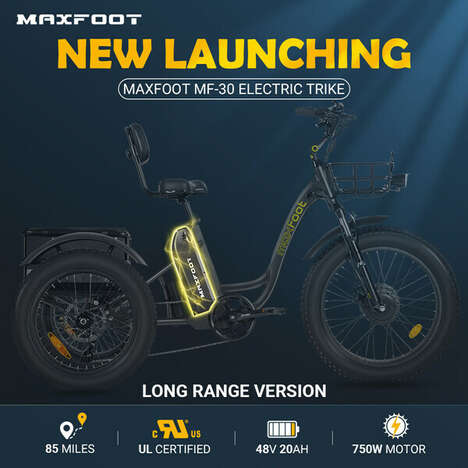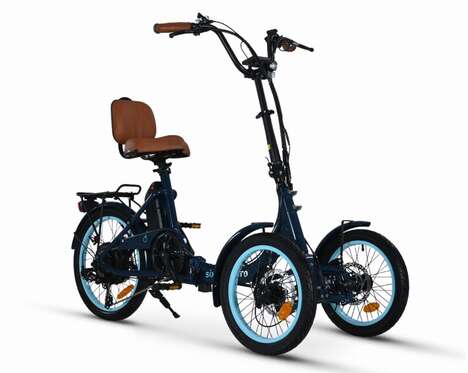
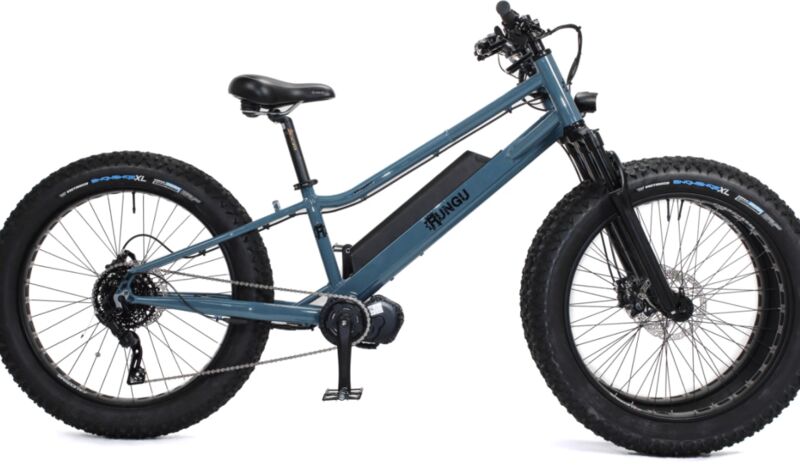
Rungu, a California-based company that is renowned for its eye-catching and high-performance electric fatbikes, has launched a brand new three-wheeled electric fatbike that offers greater stability in addition to a boosted battery range and higher ground clearance.
The XR Rubicon Trail Edition electric fatbike is equipped with an 18-Ah lithium-ion battery which translates to a significantly increased range of 30 percent compared to previous offerings which only offered 15-Ah. This effectively means that the fatbike is capable of taking advantage of up to 68 km of electric-assist, significantly opening up a wide range of opportunities and journey options for riders.
Priced in at $8,517, the Rungu XR Rubicon Trail Edition is a great option for fatbike enthusiasts who don't want to compromise on range possibilities.
Image Credit: Rungu
Key Themes Behind This Trend
- Three-wheeled Electric Fatbikes
- The market for stability and range enhancement technology in the cycling industry is rapidly expanding, giving rise to opportunities to develop new and improved solutions.
- Increased Battery Capacity
- Increasing electric bike battery capacity opens up a wider range of applications and opportunities for riders seeking longer journeys and greater convenience.
- High-performance Electric Bikes
- Advances in electric bike performance promise a new generation of bikes that significantly reduce the barriers to cycling for new and experienced riders alike.
Where This Applies
- Electric Bike Manufacturers
- Electric bike manufacturers can explore opportunities to improve range and stability features in their products, driving sales and attracting new customers.
- Outdoor Sporting Goods Retailers
- Outdoor sporting goods retailers can capitalize on the trend for electric fatbikes by offering specialist products and services that meet the specific needs of this growing market.
- Green Transportation Providers
- Green transportation providers can leverage advancements in electric bike technology to offer customers eco-friendly alternatives to traditional forms of transportation, reducing their carbon footprint whilst increasing flexibility and affordability for users.