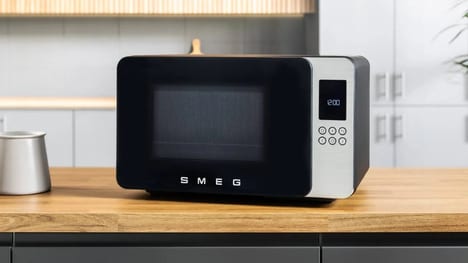
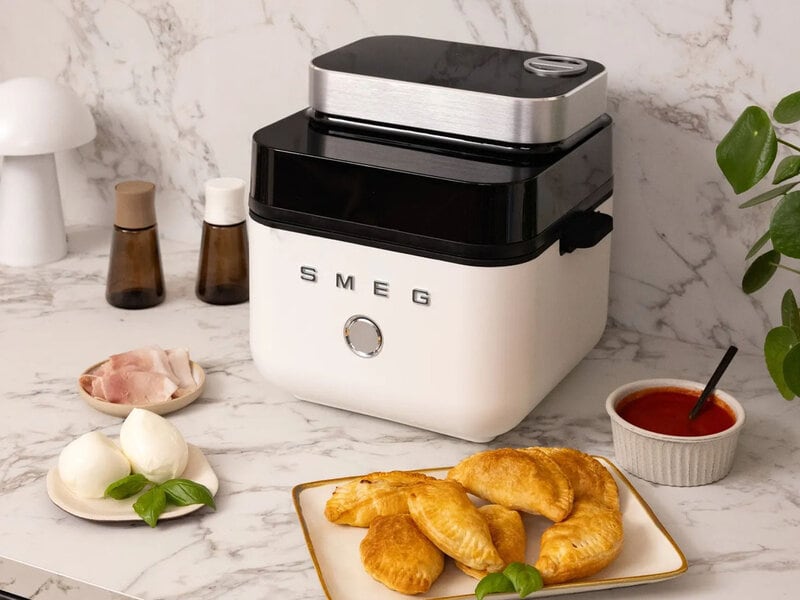
Smeg offers the AFC01 Dual Flavor Air Fryer, its first dedicated air fryer featuring a built-in steaming system and a 7.3-litre capacity. The appliance pairs a matte, colorful body with a large viewing window and a touchscreen control panel that flips the top open at the touch of a button.
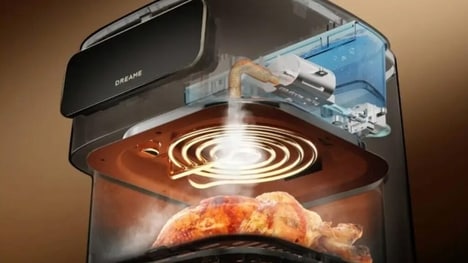
The AFC01 has two cooking modes, Crispy and Juicy+Crispy, and seven presets that can run in manual or preset mode. A top-mounted removable water cartridge supplies steam to keep interiors moist while forming a crisp exterior, and the basket has silicone handles and a non-stick ceramic coating that is dishwasher-safe.
For cooks, the dual hot-air-and-steam approach promises crisp crusts without excess oil and juicier interiors for breads and wedges. Offered in black, white, storm blue and emerald green at £199.95, the model brings a more design-forward, multisensory option to countertop frying.
Image Credit: Yanko Design, Smeg
What's Driving This Trend
- Steam-assisted Air Frying
- Hybrid steam and hot-air cooking systems create room for countertop appliances that deliver crisp textures while preserving moisture in breads, vegetables, and prepared meals.
- Design-forward Small Appliances
- Colorful finishes, matte materials, and display-worthy forms are turning functional kitchen tools into lifestyle products that compete on aesthetics as much as performance.
- Multimode Countertop Cooking
- Preset-driven appliances with multiple cooking modes signal demand for compact devices that simplify varied meal preparation without requiring full-size ovens or separate equipment.
Who This Affects Most
- Home Appliances
- Integrated steaming, air frying, and intuitive controls are reshaping small appliance portfolios around convenience, healthier cooking, and premium kitchen styling.
- Kitchenware Retail
- Retailers can differentiate assortments with compact, visually distinctive cooking devices that appeal to consumers seeking both decorative value and everyday utility.
- Food Technology
- Moisture-retention cooking, ceramic non-stick surfaces, and oil-reduction formats point to product development paths centered on texture optimization and cleaner preparation methods.