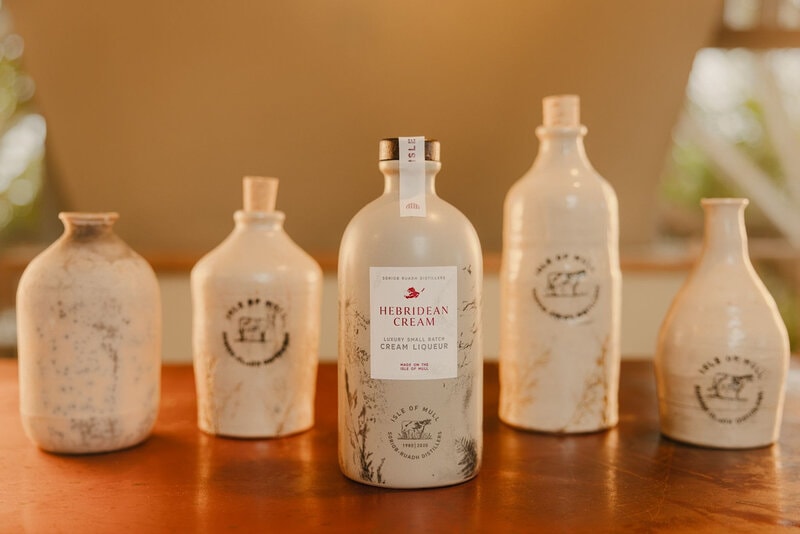
Isle of Mull Cheese is expanding into spirits with Hebridean Cream Liqueur, a limited-edition drink that repurposes whey from cheesemaking. It blends oak-aged whey-ski with the farm’s cream, giving coffee and cocktail drinkers a bottle that carries the dairy’s milk stream into another category.
Developed by third-generation family member Lily Reade, the release uses a ceramic bottle patterned from farm textures, including cow hair and leaves. The liqueur is 17% ABV, and the first batch is limited to 600 bottles. Sales start October 27 on the Isle of Mull Cheese website and at the Glass Barn Farm Shop.
A 600-bottle release turns leftover whey into a small-batch revenue stream instead of a low-profile by-product. Direct sales through the dairy’s own channels keep the sustainability story tied to place, which suits a giftable spirits drop.
Image Credit: Isle of Mull
What's Driving This Trend
- Byproduct-based Beverages
- Dairy, grain, and fruit processors are finding premium beverage formats for overlooked outputs, creating new margins from materials once treated as waste.
- Farm-branded Spirits
- Place-based alcohol releases are extending agricultural brands into gifting and hospitality categories while preserving provenance as a premium cue.
- Limited-edition Circular Goods
- Small-batch launches tied to resource reuse are making sustainability feel collectible, allowing scarcity and environmental value to reinforce each other.
Who This Affects Most
- Dairy
- Cheesemakers and creameries can transform whey, cream, and other processing streams into higher-value products beyond traditional food applications.
- Alcoholic Beverages
- Distillers and liqueur brands are expanding flavor development through unconventional agricultural inputs that carry authentic origin stories.
- Specialty Retail
- Farm shops and direct-to-consumer channels are becoming launchpads for niche circular products that pair local storytelling with premium packaging.