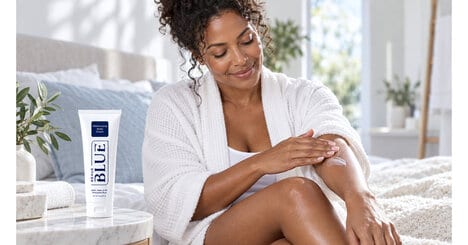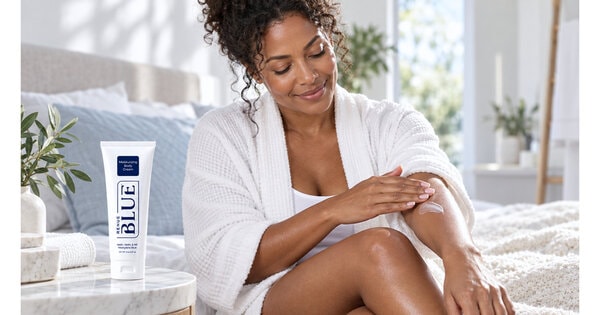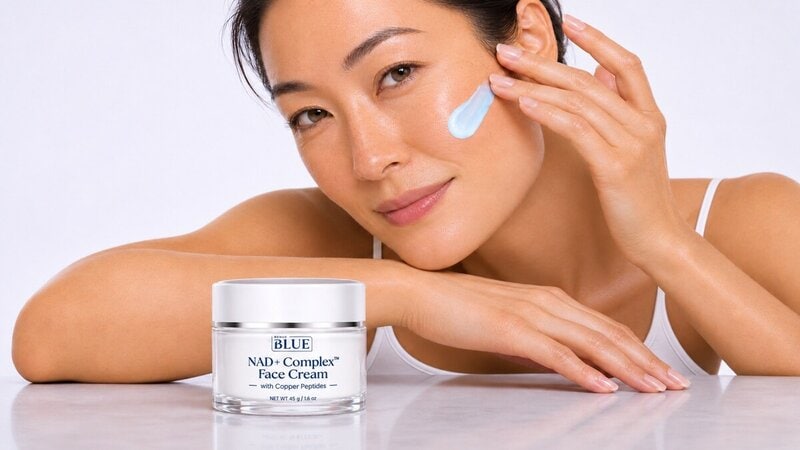
Copper peptide face creams are gaining attention as Renue By Science prepares to launch its reformulated Renue Blue Face Cream on December 7. The moisturizer combines GHK-Cu copper peptides, methylene blue, and an NAD+ Complex in a formula specifically developed to maintain ingredient stability while addressing visible signs of skin aging.
The updated cream contains 0.3% GHK-Cu and 5% NAD+ Complex, alongside methylene blue. Rather than adding copper peptides to its existing moisturizer, the company redesigned the formula to exclude ingredients that could interfere with the peptide's structure. Designed for morning and evening application, the cream can replace a conventional moisturizer.
For Renue By Science, the reformulation strengthens its longevity-focused skincare portfolio while appealing to consumers interested in researched active ingredients. Combining multiple ingredients within one product could also attract shoppers seeking simpler routines and encourage purchases through the brand's direct-to-consumer website.
Image Credit: Renue By Science
What Makes This Trend Stand Out
- Longevity Skincare
- Beauty brands are translating cellular aging science into daily topical products that appeal to consumers seeking evidence-based anti-aging routines.
- Multi-active Moisturizers
- Formulas combining peptides, antioxidants, and NAD+ support create room for simplified regimens that replace several single-benefit skincare steps.
- Stability-first Formulation
- Ingredient compatibility is becoming a competitive differentiator as brands redesign bases around fragile actives to preserve performance and credibility.
Sectors Adopting This
- Skincare
- Premium facial care is expanding through science-backed active combinations that blur the line between cosmetic hydration and longevity-focused treatment.
- Beauty Ecommerce
- Direct-to-consumer channels provide niche skincare brands with a pathway to educate shoppers on complex ingredients while retaining purchase data and margins.
- Biotechnology
- Research-derived compounds such as peptides and NAD+ complexes are creating crossover opportunities between life sciences innovation and consumer wellness products.