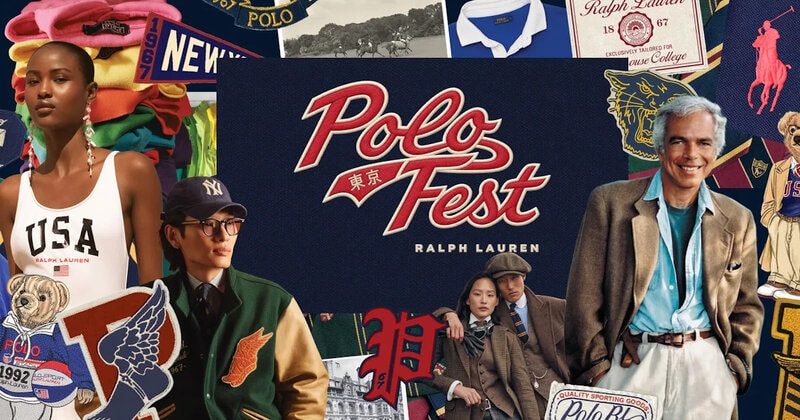
Ralph Lauren's PoloFest gives Polo fans and collectors a three-day event in Tokyo tied to the label's approaching 60th anniversary. Starting Friday, October 23rd, the activation opens at Jing Harajuku in Shibuya as an in-person program built around the brand's long history.
Inside the customized venue, vintage vendors sit alongside panel talks led by voices such as writers and designers, giving attendees both archival product and context around its cultural reach. Tokyo fits the format because Polo entered Japan in 1976, and the city now draws both current-product shoppers and archive hunters.
Tokyo's collector base turns PoloFest into more than a pop-up; it moves resale, fandom and brand storytelling into one live format. A three-day run centered on vintage vendors and panels widens how a fashion house can serve loyalists, especially in a market with decades of Polo history.
Image Credit: Ralph Lauren
What's Driving This Trend
- Collector-led Brand Festivals
- Heritage labels are blending resale, panels, and product discovery into immersive gatherings that turn loyal fan communities into high-value cultural marketplaces.
- Archive-driven Retail
- Vintage assortments paired with brand storytelling create new value around historical products, giving fashion houses a stronger role in the secondary market.
- Localized Heritage Activations
- City-specific events rooted in decades of regional brand history deepen consumer relevance while creating scalable formats for global anniversary campaigns.
Who This Affects Most
- Luxury Fashion
- Premium apparel brands can expand beyond seasonal retail by monetizing archives, collector access, and culturally focused experiences.
- Event Marketing
- Experiential agencies are positioned to build hybrid retail-and-content environments where fandom, education, and commerce reinforce one another.
- Resale Fashion
- Curated vintage vendors within official brand settings legitimize secondary-market shopping and open new partnership models with heritage labels.