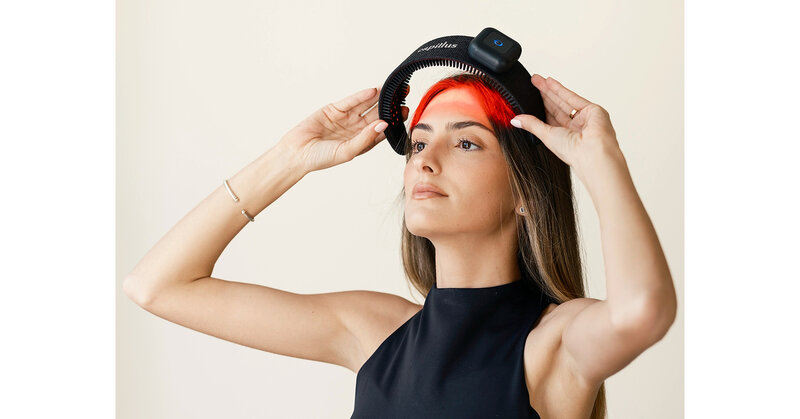
Capillus is expanding targeted hair light therapy with the HairBand, a wearable device designed to concentrate treatment along the part line, hairline and frontal scalp. Rather than providing full-head coverage, the lightweight system uses 82 medical-grade 650 nm laser diodes to deliver focused low-level laser therapy during five-minute sessions, three times per week. The female-first design responds to areas where women frequently monitor early changes, while a magnetic battery, USB-C charging and automatic shut-off support convenient at-home use.
For Capillus, the HairBand creates a more accessible entry point alongside its broader light therapy portfolio by targeting specific scalp areas with a smaller wearable format. Its $599 price maintains a premium positioning while potentially attracting consumers who do not need full-head coverage. The streamlined routine could also broaden adoption by reducing the time and equipment associated with at-home light therapy.
Image Credit: Capillus
What Makes This Trend Stand Out
- Targeted Beauty Wearables
- Precision-focused devices that treat specific concern areas are creating room for smaller, lower-cost formats that expand premium beauty technology beyond full-coverage systems.
- At-home Light Therapy
- Consumer-friendly phototherapy routines are bringing clinic-inspired treatments into daily personal care through compact hardware, automated settings and shorter session times.
- Female-first Haircare Tech
- Products designed around women’s early hair-thinning patterns are opening whitespace for more personalized scalp care, diagnostic tools and targeted regrowth solutions.
Sectors Adopting This
- Beauty Devices
- Wearable formats with medical-grade components are reshaping the category by blending efficacy claims with convenience-driven consumer electronics design.
- Haircare
- Specialized scalp and hairline treatments are expanding the market beyond shampoos and topicals toward tech-enabled prevention and maintenance products.
- Consumer Health
- Accessible at-home therapeutic devices are supporting a shift toward self-managed wellness routines that reduce reliance on in-office treatments.