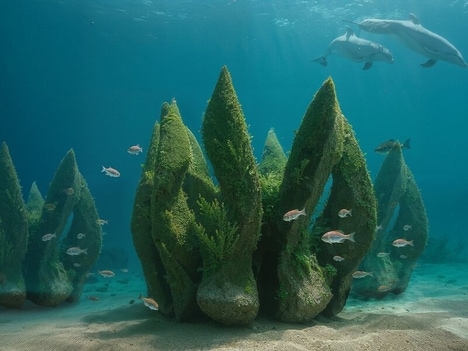
The Bloom Aquatic Farm was designed for a much wetter world than the one we currently live in. Sitbon Architectes designed this floating farm as both a research facility and as a way to oxygenate ocean "dead zones." The idea is that CO2 from the air could be absorbed by the upper levels of the biome with phytoplankton filtering it out and releasing oxygen both into the air and into "dead zones" in the ocean below.
The result is a structure that could both clean the air and inject life-giving oxygen into oceans, streams, lakes etc. The structure wouldn't be designed as a living space, although it would be able to house the scientists who operate it. Sitbon Architectes imagines the Bloom Aquatic Farm first rolling out in the Indian Ocean where water levels are expected to rise substantially in the coming years.
Key Themes Behind This Trend
- Floating Agriculture
- The Bloom Aquatic Farm demonstrates the trend of floating agriculture, creating opportunities for sustainable food production and research facilities in water-rich environments.
- Air Purification
- The concept of using phytoplankton to filter CO2 from the air and release oxygen presents disruptive innovation opportunities for air purification technologies and solutions.
- Ocean Conservation
- The Bloom Aquatic Farm addresses the issue of ocean dead zones, highlighting the trend of innovative solutions for revitalizing and preserving marine ecosystems.
Where This Applies
- Agriculture
- The concept of floating farms opens up possibilities for agricultural practices in water-based environments, promoting food security and sustainable farming methods.
- Environmental Technology
- The use of phytoplankton for air purification and oxygenation presents opportunities for the development of innovative technologies and solutions focused on environmental sustainability.
- Marine Science
- The Bloom Aquatic Farm serves as a research facility for studying marine ecosystems and finding solutions to combat ocean dead zones, providing opportunities for advancements in marine science and conservation initiatives.