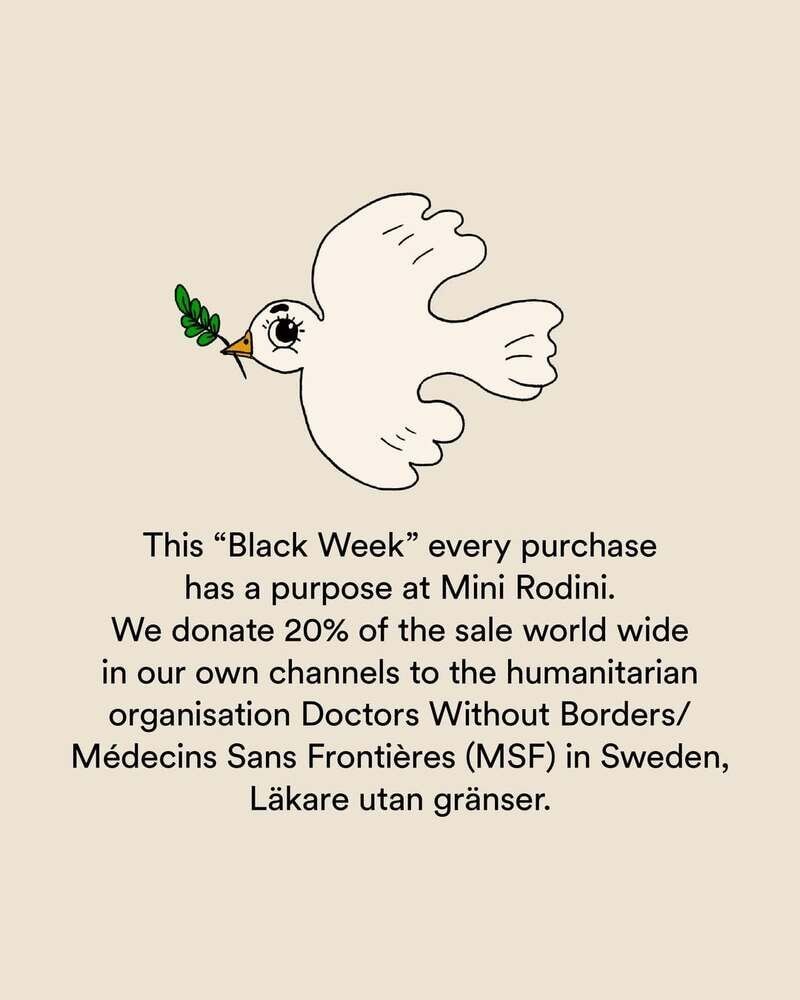
Mini Rodini's initiative during Black Week 2024 stood out for its commitment to both ethical business practices and social responsibility. The brand pledged to donate 20% of all sales made through its own channels to Doctors Without Borders/Médecins Sans Frontières in Sweden. This partnership reinforced Mini Rodini’s continued dedication to integrating philanthropy into its operations. Customers were invited to shop for the brand’s ethically sourced, sustainably produced children’s clothing while knowing that their purchases would contribute to global humanitarian efforts, particularly those addressing conflict and disease outbreaks in over 70 countries.
Since its inception in 2006, Mini Rodini has placed a strong emphasis on sustainability and social impact. The company utilizes 100% certified organic and recycled materials, and its annual suitability reports and living wage initiatives showcase its transparency and commitment to ethical production.
Image Credit: Mini Rodini
Key Themes Behind This Trend
- Philanthropic Commerce
- The integration of charitable contributions within sales strategies offers a new approach to combine profit with purpose.
- Sustainable Children’s Fashion
- Eco-friendly materials and ethical production redefine children's apparel, presenting opportunities for brands to appeal to eco-conscious consumers.
- Transparency in Retail
- Detailed reporting on sustainability and wage practices boosts consumer trust and sets a benchmark for corporate responsibility.
Where This Applies
- Fashion Industry
- The movement towards sustainable and ethical production methods is revolutionizing how fashion brands operate and connect with customers.
- E-commerce
- Online sales channels embracing philanthropic partnerships stand to benefit from increased consumer engagement and loyalty.
- Non-profit Sector
- Collaborations between businesses and global aid organizations create innovative pathways for funding and awareness.