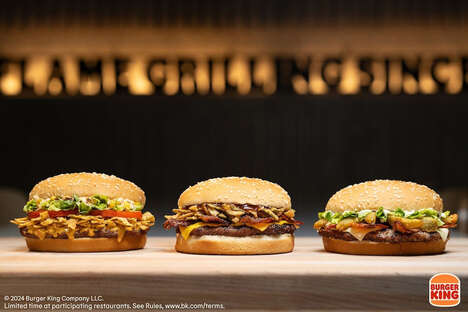
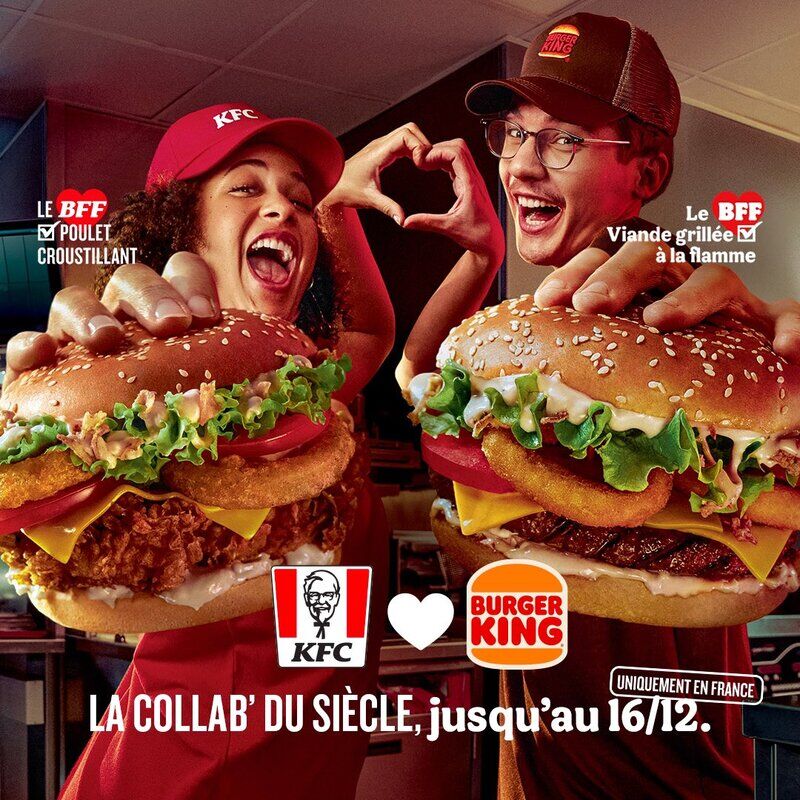
Fast food brand rivalries thrive on playful jabs and competitive marketing, but two competitors—Burger King and KFC— recently joined forces to craft an irresistible, limited-edition BFF Burger to captivate fans no matter which side they tend to root for.
In France, for a limited time throughout November and December, fast food burger lovers can look forward to savoring the BFF Burger on a sesame seed bun with iceberg lettuce, fresh tomatoes, crispy onions, cheddar cheese, and a unique white BBQ sauce. As part of this unusual partnership, fans will make the call between choosing KFC's crispy fried chicken or Burger King's flame-grilled beef—or the vegetarian-friendly versions of these offerings so that this friendly offer is more accessible to all.
What's Driving This Trend
- Collaborative Menu Items
- Distinct brand collaborations can drive consumer interest and elevate brand loyalty through shared unique menu items.
- Limited-edition Fast Food Innovations
- Releasing limited-edition items generates buzz and urgency, compelling customers to try exclusive offerings before they disappear.
- Hybrid Fast Food Choices
- Providing consumers with the option to mix and match elements from different brands creates a novel food experience that encourages repeat visits.
Who This Affects Most
- Fast Food Industry
- Competition and collaboration between major fast food brands can redefine market dynamics and consumer expectations.
- Food and Beverage Marketing
- Creative cross-brand partnerships in marketing campaigns can captivate diverse audiences and expand customer bases.
- Vegetarian and Vegan Fast Food
- Offering vegetarian-friendly versions of popular fast food items meets the growing demand for plant-based options among health-conscious consumers.