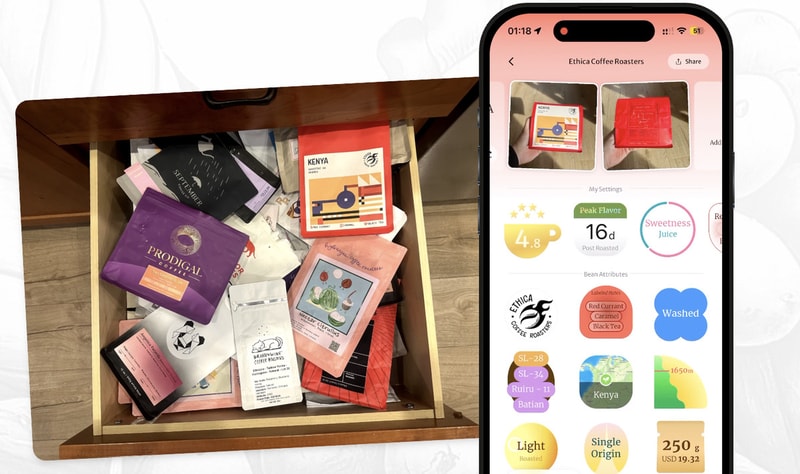
BeanBook: AI Coffee Tracker is a specialty coffee companion designed to help enthusiasts document every part of their brewing journey. From tracking beans and roast dates to saving recipes and grinder settings, it provides a structured way to organise coffee data in one place.
The app uses AI to simplify logging, making it easier to capture brewing details without interrupting the experience. Users can build a searchable archive of coffees they've tried while comparing recipes, flavour notes, and brewing variables over time.
BeanBook is aimed at home brewers and coffee professionals who want greater consistency and deeper insight into their brewing process. Its clean organisation makes revisiting successful recipes and experimenting with new beans straightforward. BeanBook: AI Coffee Tracker transforms coffee brewing into a measurable, evolving practice where every cup contributes to a richer personal coffee journal.
Image Credit: BeanBook AI Coffee Tracker
What Makes This Trend Stand Out
- AI Taste Tracking
- Machine-learning companions are turning subjective flavor experiences into structured personal datasets that reveal patterns in preference, preparation, and product performance.
- Personal Brewing Analytics
- Home beverage rituals are becoming measurable systems where recipe variables, equipment settings, and ingredient histories support greater consistency and experimentation.
- Searchable Consumption Journals
- Digital archives for niche hobbies are expanding beyond simple notes into intelligent memory layers that make past purchases, experiences, and outcomes easier to compare.
Sectors Adopting This
- Specialty Coffee
- Data-rich brewing tools create new value around beans, roast profiles, and recipes by linking artisanal quality with repeatable, insight-driven preparation.
- Consumer Apps
- AI-powered journaling formats are opening opportunities for highly focused lifestyle utilities that replace generic note-taking with domain-specific organization and recommendations.
- Smart Kitchen Technology
- Connected food and beverage ecosystems gain relevance as software captures preparation context that can inform equipment design, personalization, and automated workflows.