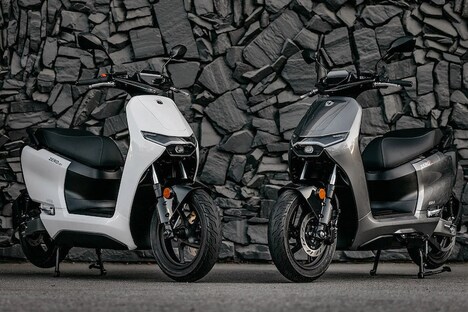

Zeno, a startup founded by former Tesla and Apple engineers, announced a $25 million funding round to accelerate production of its battery-swap motorbikes, featuring swappable packs designed for quick roadside replacement. The company said it has sold nearly 1,000 units since debuting the model, and the new capital is intended to expand manufacturing capacity and supply chain resilience.
The bikes pair a compact electric drivetrain with modular swappable batteries that riders can exchange to extend range without long charging waits, and Zeno is refining assembly and logistics workflows to meet growing demand. For consumers, faster production means wider availability of a low-emission urban transport option that reduces downtime for riders; the swap model aligns with trends toward battery-as-service and shared charging infrastructure in electric mobility.
Image Credit: Zeno
What's Driving This Trend
- Battery-swap Adoption
- Widespread acceptance of swappable battery packs is enabling near-instant refueling experiences that disrupt traditional charging infrastructure and ownership models.
- Modular Battery Ecosystems
- Interoperable, standardized battery modules are creating marketplaces for battery lifecycle services and secondary uses beyond vehicle propulsion.
- Rapid Urban Electrification
- Accelerated deployment of compact electric two-wheelers is reshaping last-mile transport dynamics and reducing reliance on fossil-fuel-powered personal mobility.
Who This Affects Most
- Urban Mobility Operators
- Shared micromobility and fleet operators can leverage rapid-swap vehicles to increase vehicle utilization and minimize downtime across dense city networks.
- Battery-as-a-service Platforms
- Subscription and swapping platforms are positioned to monetize battery health data and lifecycle management while decoupling battery ownership from vehicle sales.
- Manufacturing and Supply Chain
- Localized, flexible assembly and resilient component sourcing strategies are becoming critical to scale production rapidly and absorb demand volatility for modular EVs.