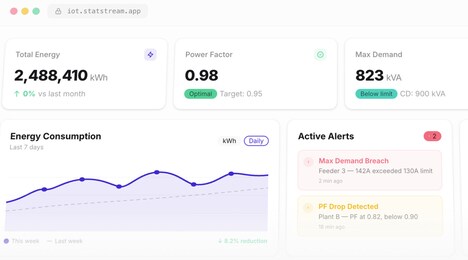
Managing connected devices can be complex when companies need reliable infrastructure for monitoring, updates, and real-time communication. AtomIoT is an enterprise IoT server designed to help hardware companies connect, manage, and monitor smart devices through protocols including LoRaWAN, MQTT, and HTTP. The platform provides essential tools such as device logs, firmware over-the-air updates (FOTA), alerts, and digital twins to simplify IoT operations.
Designed for businesses building connected hardware solutions, AtomIoT helps teams bring devices online quickly while maintaining visibility and control. By providing a ready-to-use IoT infrastructure, the platform reduces development time and enables more efficient device management. AtomIoT gives companies the tools they need to build, scale, and operate smarter connected products with confidence.
Image Credit: AtomIoT
What's Driving This Trend
- Ready-to-use Iot Infrastructure
- Prebuilt device management platforms reduce technical barriers for hardware firms while opening space for faster connected product launches and scalable recurring-service models.
- Firmware-over-the-air Control
- Remote update capabilities strengthen product longevity and security, creating potential for adaptive devices that improve after deployment without costly field servicing.
- Digital Twin Operations
- Virtual representations of connected assets provide richer operational visibility, enabling predictive maintenance, simulation-based optimization, and more responsive enterprise IoT ecosystems.
Who This Affects Most
- Enterprise Iot Platforms
- Centralized management layers for protocols, logs, alerts, and device connectivity support new competitive models built around reliability, interoperability, and simplified deployment.
- Smart Hardware Manufacturing
- Connected device makers gain infrastructure that shortens development cycles, making it more feasible to differentiate through software-enabled features and lifecycle services.
- Industrial Automation
- Real-time monitoring and remote device control enhance distributed equipment oversight, supporting more resilient operations across factories, utilities, logistics, and asset-heavy environments.