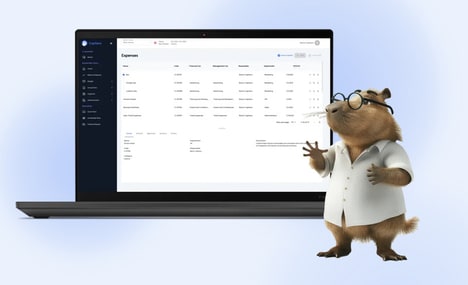

Arito AI introduced the Arito Platform, an AI-native workspace built for finance and revenue teams that combines autonomous data ingestion with natural-language interaction. Founded in 2025 by Daniel Zahavi and Michael Estrin, the Tel Aviv– and Palo Alto–based startup raised $6 million in Seed funding led by Amplify Partners to expand the platform and its AI capabilities.
The system is designed to understand common financial-system structures without requiring complex integrations, enabling teams to generate dashboards, monitor key metrics and receive AI-powered alerts through conversational prompts. Arito also highlighted spreadsheet-focused AI integrations and a patent-pending approach that trains AI agents using real-world examples to improve analysis quality and workflow personalization.
For finance and operations teams, the platform aims to reduce reliance on analysts and static reporting by delivering self-serve, real-time intelligence with clearer data lineage and faster decision support. The launch reflects a broader movement toward domain-specific AI agents embedded directly into enterprise operational workflows.
Image Credit: Shutterstock/Digineer Station
Part of the cluster
Practice Copilots
AI tools are becoming always-on preparation layers for learning and upskilling
Explore the cluster


Why This Trend Is Growing
- AI-native Workspaces
- The emergence of workspaces built around native AI capabilities opens possibilities for embedding conversational intelligence directly into day-to-day financial workflows and decisioning.
- Autonomous Data Ingestion
- Platforms that automatically map and ingest heterogeneous financial data without heavy integrations enable faster creation of real-time analytics and reduce dependency on engineering resources.
- Spreadsheet-centric AI
- AI enhancements focused on spreadsheet interactions allow legacy finance tools to gain contextual understanding and generate actionable insights from familiar user interfaces.
Industries Being Reshaped
- Financial Services
- Banks, asset managers, and corporate treasury functions stand to benefit from AI-driven reporting and alerts that can streamline risk monitoring and accelerate portfolio decision cycles.
- Enterprise Software
- Vendors of ERP, FP&A, and BI systems may be reshaped by domain-specific AI agents that deliver personalized workflows and reduce the need for separate analytics teams.
- Revenue Operations
- Sales and revenue operations teams could leverage conversational analytics to shorten forecasting loops and improve cross-functional alignment with up-to-date metrics.