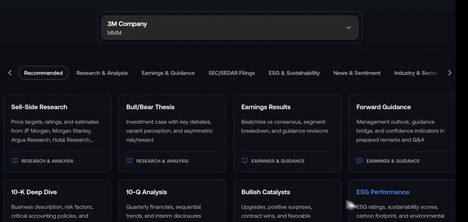

Meridian, a New York startup, debuted an IDE-style workspace for agentic financial modeling, featuring embedded auditing and deterministic workflows to tame spreadsheet-driven analysis. The company launched from stealth and announced a $17 million seed round led by Andreessen Horowitz and The General Partnership, marking its public introduction.
The platform operates as a standalone environment rather than a plugin, integrating external data sources and developer-style tooling to manage workflows and assumptions. Meridian’s team combines alumni from AI firms and finance veterans, and it reported early commercial traction with contracts and pilot work at firms like Decagon and OffDeal.
For finance teams, Meridian aims to speed repeatable valuation and modeling tasks while preserving traceability, reducing the ambiguity that comes with black-box LLM outputs. By marrying agentic AI with auditable engineering patterns, it reflects a broader trend toward enterprise-grade, explainable AI for high-stakes workflow automation.
Image Credit: Meridian
What Makes This Trend Stand Out
- Ide-style Agentic Modeling
- A development-focused workspace for agentic models creates an environment where repeatable, composable financial logic can replace ad-hoc spreadsheets.
- Auditable Agent Workflows
- Embedding deterministic audit trails and explainability into autonomous agents reduces opacity and makes model-driven decisions traceable for compliance and governance.
- Deterministic Financial Automation
- Shifting from probabilistic LLM outputs to deterministic workflows allows valuation and forecasting processes to be executed with predictable, debuggable outcomes.
Sectors Adopting This
- Investment Banking
- Complex deal modeling and diligence processes stand to be transformed by agentic systems that consolidate assumptions, data, and audit-ready rationale into a single reproducible workspace.
- Corporate FP&A
- Budgeting, forecasting, and scenario analysis could be standardized around repeatable agentic pipelines that preserve lineage and versioned assumptions across reporting cycles.
- Financial Software Platforms
- SaaS vendors have the opportunity to integrate developer-grade tooling and embedded auditing to offer enterprise-grade, explainable automation for high-stakes financial workflows.