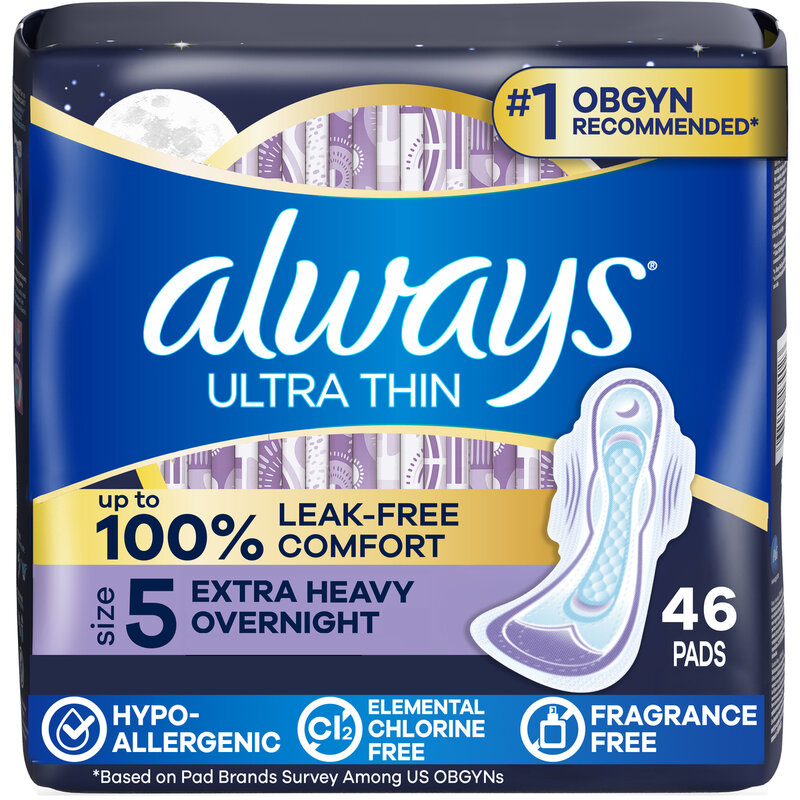
Always is highlighting its Ultra Thin Extra Heavy Overnight Pads as a protection option for postpartum moms whose needs may change after childbirth. The pads provide up to 12 hours of coverage and up to 100% leak-free protection while absorbing twice as fast as the leading store-brand pad. Designed with hypoallergenic, fragrance-free materials, the product is also dermatologist approved by the Skin Health Alliance.
By positioning an existing period-care product for postpartum use, Always is extending its relevance beyond traditional menstrual routines into another stage of women’s health. The approach allows consumers to use a familiar, widely available product during recovery without requiring a separate specialty format. For Always, the positioning can broaden the product’s audience and strengthen its presence across different life stages, while recognition from PARENTS may help increase visibility among new mothers seeking dependable postpartum protection.
Image Credit: Procter & Gamble
Key Themes Behind This Trend
- Postpartum Repositioning
- Existing period-care products are being reframed for childbirth recovery, creating space for brands to extend familiar formats into underserved life-stage needs.
- Dermatologist-approved Comfort
- Hypoallergenic, fragrance-free personal care is gaining importance as sensitive recovery moments increase demand for clinically validated everyday products.
- Extended-wear Absorbency
- Long-duration leak protection is reshaping expectations for postpartum and overnight care, with performance-led claims helping mainstream products compete with specialty formats.
Where This Applies
- Feminine Care
- Broader use cases across menstruation, postpartum recovery, and sensitive-skin routines are expanding category relevance beyond conventional cycle-based purchasing.
- Maternal Health
- Accessible recovery products available through mass retail are reducing dependence on niche postpartum solutions while supporting more convenient care after birth.
- Personal Hygiene
- Performance, skin safety, and comfort are converging in hygiene products as consumers seek dependable protection for transitional health moments.