
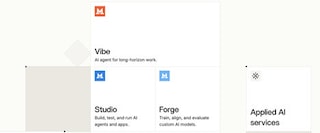
AI scientific workbenches are reshaping research by combining coding, data analysis, literature review, visualization, and computing resources into a single AI-powered environment. Anthropic's Claude Science brings together specialized research agents, scientific databases, reproducible workflows, and integrated compute management, enabling scientists to move from hypothesis to publication-ready outputs with fewer disconnected tools. The platform also emphasizes transparent results by preserving code, citations, and execution histories, making research easier to validate and reproduce.
For organizations, this signals a shift toward unified research platforms that reduce administrative overhead and accelerate complex scientific workflows. Pharmaceutical companies, universities, biotech firms, and research institutions can improve productivity while supporting more consistent collaboration across teams. As AI becomes embedded throughout the research lifecycle, vendors that integrate domain-specific knowledge, governance, and reproducibility into their platforms will be better positioned to support scientific discovery at scale.
Image Credit: Anthropic's Claude Science
Part of the cluster
Guided Automation
Work software is shifting from static tools to comprehensive editable assistants
Explore the cluster

Key Themes Behind This Trend
- Unified AI Research Platforms
- Integrated scientific workbenches create opportunities for replacing fragmented research stacks with centralized environments that combine analysis, coding, literature review, visualization, and compute management.
- Reproducible Workflow Automation
- Transparent execution histories, preserved code, and linked citations introduce new value in research systems where validation, auditability, and publication readiness are built into every workflow.
- Domain-specific Research Agents
- Specialized AI agents trained around scientific disciplines enable differentiated platforms that can support complex hypothesis generation, experimental design, and evidence synthesis at scale.
Where This Applies
- Pharmaceuticals
- Drug discovery teams benefit from AI-enabled research environments that compress literature analysis, data interpretation, and reproducible documentation into faster preclinical decision-making cycles.
- Biotechnology
- Biotech firms gain competitive advantage from unified scientific platforms that connect experimental data, computational biology, and collaborative workflows across distributed research teams.
- Higher Education
- Universities and academic labs face a new platform opportunity as AI workbenches improve research productivity, grant output, and cross-disciplinary collaboration while preserving scholarly transparency.