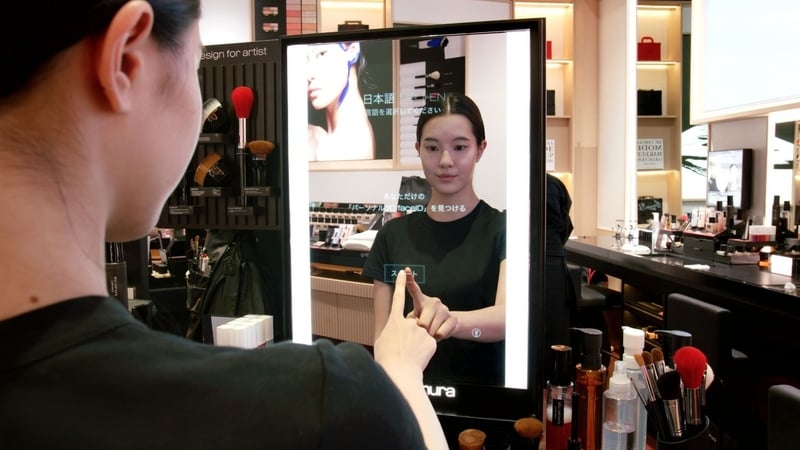
shu uemura, the Japanese makeup brand under the L'Oréal umbrella, has collaborated with the AI platform LOOOK.AI to launch the AI Mirror — a permanent in-store installation at its newly renovated global flagship, shu:ARTstage in Tokyo's Omotesando Hills district.
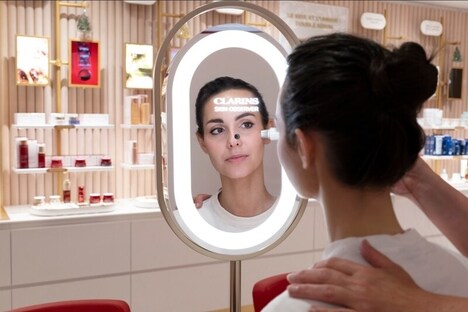
The AI Mirror embeds the digital intelligence behind an actual reflective glass surface rather than displaying a live camera feed on a screen. As a result, customers maintain a direct, natural view of their own reflection while AI-generated content and analysis appear as an overlay.
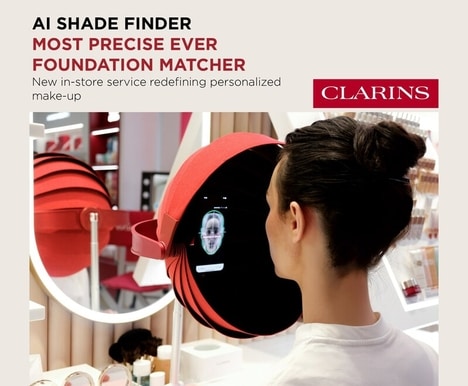
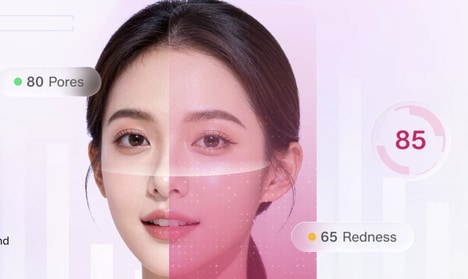
The process begins when a user activates a touch interface designed to resemble a digital makeup brush, which then initiates a three-dimensional facial scan that assesses multiple anatomical features. This includes overall face shape, proportional ratios, and the balance of individual features. Upon completion, the system synthesizes this data into a personalized Face ID summary that provides targeted recommendations.
Image Credit: shu uemura x LOOOK.AI
What Makes This Trend Stand Out
- Reflective AI Interfaces
- Embedded intelligence behind physical mirror glass creates immersive retail touchpoints that preserve natural self-perception while adding personalized digital guidance.
- Facial Analytics Personalization
- Three-dimensional face scanning enables beauty brands to translate anatomical data into tailored product recommendations, services, and loyalty experiences.
- Permanent Experiential Retail
- Flagship stores are evolving into technology-enabled destinations where interactive installations deepen engagement and differentiate premium brand environments.
Sectors Adopting This
- Beauty Retail
- Cosmetics retailers can use AI-assisted consultation tools to merge product discovery with individualized recommendations inside physical stores.
- Retail Technology
- Smart mirror systems represent a growing category of ambient commerce infrastructure that blends sensors, interfaces, and real-time recommendation engines.
- Consumer AI
- Personalized analysis platforms are expanding into everyday shopping environments, making algorithmic guidance more tangible and emotionally resonant for consumers.