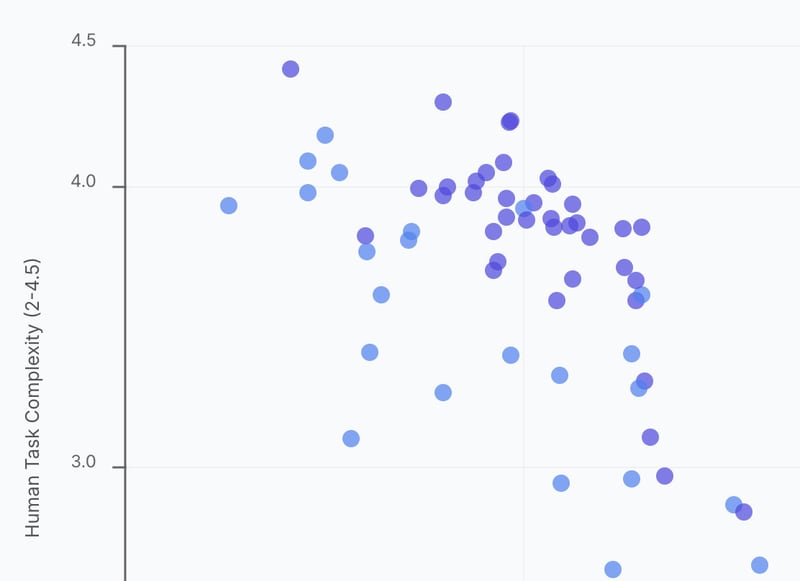
The AI Labor Index is a tracking tool designed to analyze how emerging technologies are transforming the nature of work. By mapping these tasks across different sectors, it provides a structured view of where AI is likely to have the greatest impact.
Rather than focusing solely on job titles, the index emphasizes the underlying components of work. This allows for a more granular understanding of how roles may change, shift, or be partially automated over time.
The AI Labor Index is built for researchers, policymakers, and business leaders who want a clearer picture of labor transformation. By translating complex workforce dynamics into measurable insights, it helps users anticipate and adapt to technological change.
Ultimately, it offers a data-driven perspective on how AI is reshaping the future of work at a task level.
Image Credit: The AI Labor Index
What Makes This Trend Stand Out
- Task-level Automation Mapping
- Granular analysis of work activities reveals new potential for platforms that quantify where AI can augment, replace, or restructure specific tasks across occupations.
- AI Labor Forecasting
- Predictive workforce models create space for decision tools that translate automation exposure into measurable planning insights for executives, researchers, and policymakers.
- Skills Transition Intelligence
- Data-driven visibility into changing job components supports emerging systems that connect displaced tasks with adjacent capabilities, training pathways, and future role design.
Sectors Adopting This
- Human Resources
- Workforce teams are gaining access to analytics products that redefine talent planning around task transformation rather than static job descriptions.
- Government Policy
- Public-sector labor agencies can benefit from measurement frameworks that clarify how automation risk, reskilling needs, and employment shifts vary by sector.
- Enterprise Software
- Productivity and planning platforms are positioned to integrate labor impact data into operational systems that guide organizational redesign and technology investment.