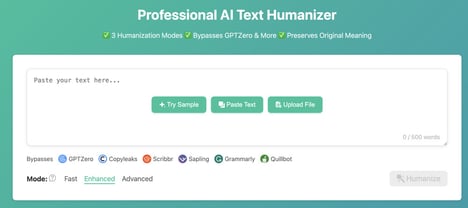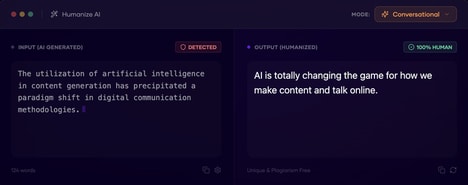
AI Humanizer is a text transformation tool designed to rephrase AI-generated content so it more closely resembles human-written language. It processes input text and adjusts structure, tone, and phrasing to reduce patterns commonly associated with machine-generated output.
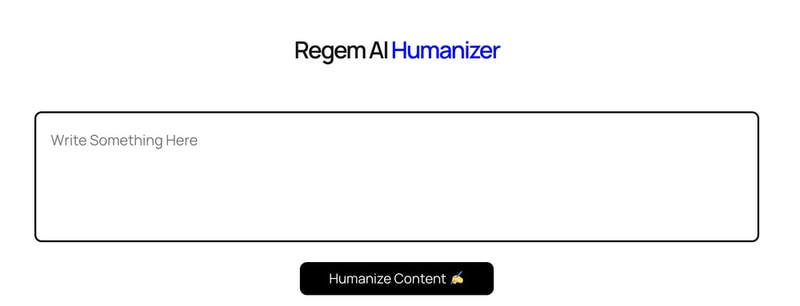
The tool is positioned for users who want to refine automated text for readability or stylistic variation. It is typically accessed through a simple interface where users paste content and receive a rewritten version. AI Humanizer is offered as a free service and is intended for fast, low-friction use cases. Its stated purpose includes making AI-assisted writing appear more natural in tone and flow. The tool reflects broader trends in content optimisation utilities, where AI is used not only for generation but also for post-processing text to adjust style, tone, and perceived authorship characteristics.
Image Credit: AI Humanizer
Key Themes Behind This Trend
- AI-powered Post-processing
- A capability where generative outputs are routinely refined by secondary AI layers to align phrasing and flow with human norms, creating potential for tools that control perceived authorship and voice consistency.
- Style-agnostic Tone Adjustment
- An emphasis on flexible tone converters that normalize or diversify stylistic markers across genres, presenting possibilities for platforms that customize readability and audience resonance at scale.
- Authorship Attribution Masking
- A movement toward obfuscating machine-origin signals in text to reduce detectability, which introduces avenues for services that manage provenance signals and credibility indicators.
Where This Applies
- Content Marketing
- High volumes of client-facing copy that require consistent brand voice and human-like engagement suggest demand for integrated rewriting services that preserve messaging while improving naturalness.
- Legal Services
- Document drafting and client communications that prioritize nuance and formal tone indicate opportunities for specialized post-processing tools that adapt AI drafts to jurisdictional and professional standards.
- Education Technology
- Platforms focused on writing instruction and assessment could leverage humanizing transformations to demonstrate stylistic alternatives and to evaluate student-authored versus AI-assisted submissions.