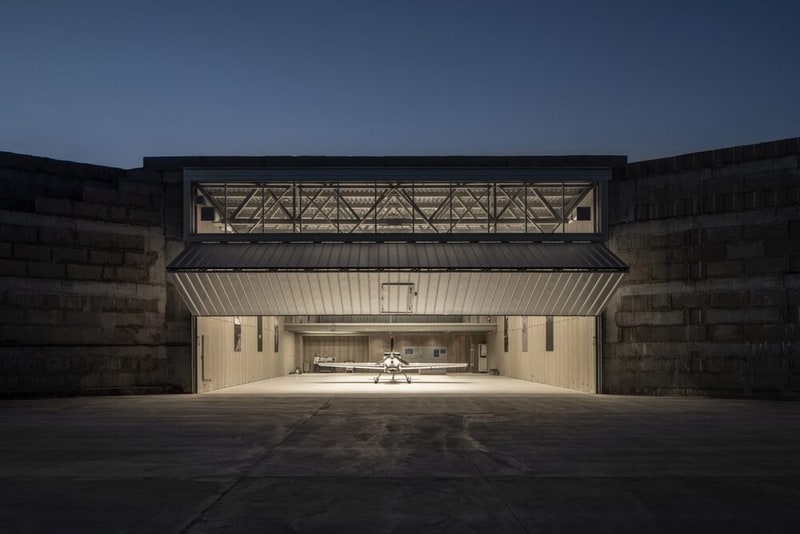
The Aerotim aircraft hangar by +kouple is a multifunctional facility designed as the headquarters for an aviation collective led by aerobatic pilot Timur Fatkullin. The Aerotim aircraft hangar by +kouple is organized as a single-volume structure that accommodates aircraft maintenance, storage, and crew operations under one roof. Raw zinc doors open vertically to allow planes to enter the hangar, while a polycarbonate band above the entrance brings daylight into the interior workspace.
Inside, the approximately 400-square-metre building features exposed steel trusses, visible air ducts, and corrugated metal roofing that emphasize the building’s industrial logic. Cement-bonded particle board panels line the walls, with visible joints referencing rivet-fastening techniques used in aircraft fuselages while also allowing damaged panels to be replaced easily. A glazed mezzanine level forms the crew station overlooking the main hangar floor, containing meeting spaces, sleeping areas, changing rooms, and a kitchenette arranged around a central briefing zone.
Image Credit: Andriy Bezuglov
Why This Trend Is Growing
- Multi-use Hangar-hubs
- A convergence of maintenance, storage and crew amenities creates potential for integrated service ecosystems within a single hangar footprint.
- Industrial Aesthetic as Identity
- The exposed trusses, ducts and corrugated surfaces signal a brand-forward aesthetic that can redefine facility identity around rugged, technical authenticity.
- Replaceable Modular Materials
- Use of easily replaceable panels and visible jointing points suggests new lifecyle models centered on rapid part swaps and low-downtime component renewal.
Industries Being Reshaped
- Aviation Maintenance Facilities
- Consolidated hangar layouts indicate opportunities for maintenance operations to be paired with customer-facing services and recurring revenue models.
- Aerospace Workforce Accommodation
- On-site crew stations with sleeping and briefing zones point to evolving workplace design that blurs boundaries between operations and lodging for flight personnel.
- Modular Building Systems
- Standardized, repairable panel systems reveal potential for prefabricated, mission-specific structures that shorten construction timelines and lower lifecycle costs.