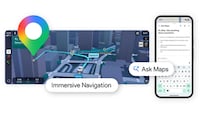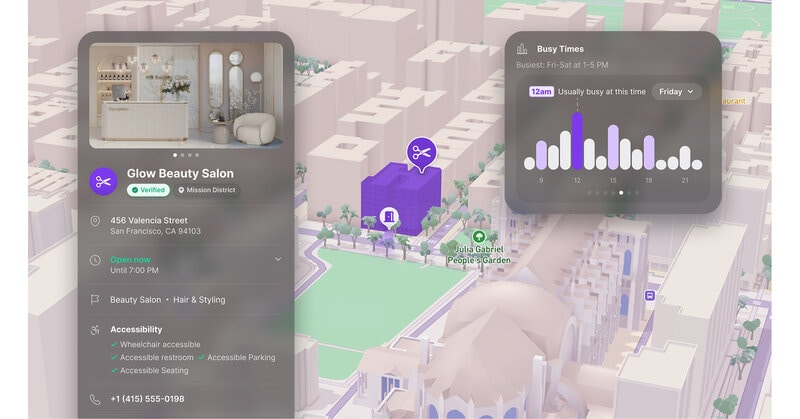
Mapbox is bringing spatial understanding to artificial intelligence with location-aware AI agents that can reason about places, routes, proximity and changing real-world conditions. Its agentic mapping engine continuously processes live inputs and anonymized movement data from more than 45,000 applications to keep geographic information current. New tools include the Mapbox Places API, covering over 250 million points of interest, and an Agent Toolkit that lets AI systems interact with more than 35 mapping and navigation controls.
Giving AI access to detailed spatial context can expand its usefulness beyond digital tasks into transportation, logistics, travel and field operations. Developers can build agents capable of adjusting routes, assessing traffic or coordinating deliveries based on current conditions rather than static information. Mapbox can consequently position its mapping infrastructure as an underlying layer for emerging agentic applications, creating new demand for its APIs as more companies build AI systems that interact with the physical world.
Image Credit: Mapbox
Key Themes Behind This Trend
- Location-aware Agents
- AI systems grounded in live spatial context are creating opportunities for services that understand proximity, movement and place-based conditions in real time.
- Agentic Mapping Infrastructure
- Mapping platforms are evolving into foundational layers for autonomous software that coordinates transportation, logistics and field activity across physical environments.
- Real-time Spatial Intelligence
- Continuously updated geographic data enables AI applications to shift from static recommendations to responsive decisions shaped by traffic, routes and local activity.
Where This Applies
- Logistics
- Delivery networks can benefit from AI agents that interpret changing road conditions, proximity and routing constraints to support more adaptive operations.
- Transportation
- Mobility providers are positioned to use location-aware intelligence for dynamic navigation, fleet coordination and context-sensitive passenger experiences.
- Travel
- Tourism and trip-planning platforms can incorporate real-world place data into AI assistants that personalize routes, recommendations and itineraries as conditions change.