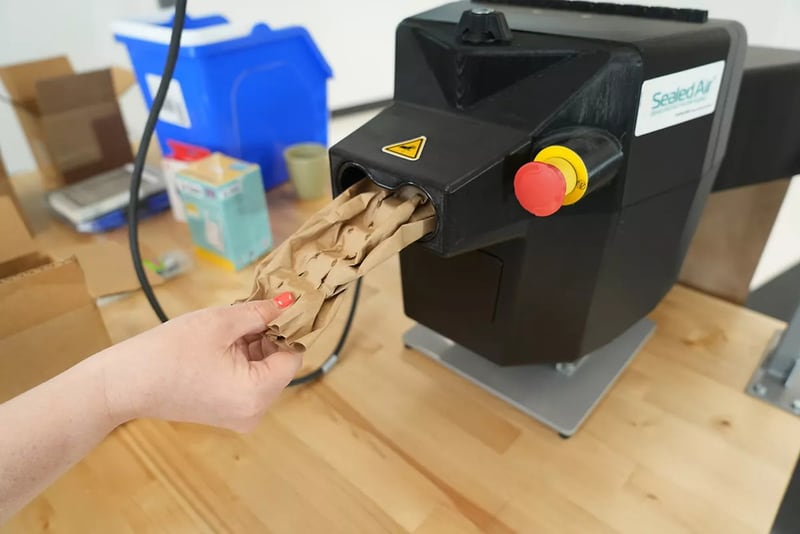
Compact paper cushioning systems are helping fulfillment centers improve packaging efficiency while reducing reliance on plastic-based protective materials. Sealed Air’s new ProPad Mini creates custom-length paper cushioning pads on demand using recycled fibre paper designed for lightweight and heavy small-sized products. Built for compact workstations and fast-paced conveyor lines, the machine includes adjustable dispensing angles, multiple mounting options and customizable configurations that allow operators to optimize limited warehouse space. The recyclable paper padding can also be reused and processed through kerbside recycling systems where available.
The system reflects how logistics and e-commerce operations are increasingly prioritizing sustainability, automation and space-efficient fulfillment infrastructure. As businesses look for ways to reduce packaging waste and improve operational flexibility, compact paper-based packaging systems may become more common across warehouses and shipping facilities. Configurable packaging tools can also help companies improve worker efficiency, streamline packing workflows and support environmentally conscious shipping strategies without sacrificing speed or protective performance.
Image Credit: Sealed Air
Why This Trend Is Growing
- Space-efficient Packaging Automation
- Warehouse layouts are being reimagined around compact automated padding systems that enable high-throughput packing within limited footprints, challenging traditional bulky packaging lines.
- Paper-based Sustainable Cushioning
- A growing shift toward recyclable fibre padding over plastic foams is creating demand for materials and recycling processes that prioritize circularity and lower lifecycle emissions.
- Configurable On-demand Packaging
- Real-time customization of pad length and dispenser orientation is enabling flexible workflows that reduce overpacking and inventory of pre-made protective materials.
Industries Being Reshaped
- E-commerce Fulfillment
- High-volume online retailers are positioned to adopt compact cushioning units that compress packing times and reshape order-fulfillment economics for small-item shipments.
- Third-party Logistics
- Outsourced warehousing providers could differentiate service offerings by integrating recyclable padding solutions that align with clients' sustainability commitments.
- Packaging Machinery Manufacturing
- Equipment makers have opportunities to design modular, space-saving dispensers and retrofit kits that replace legacy plastic-focused machines in congested workstations.