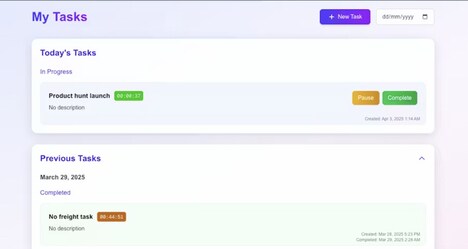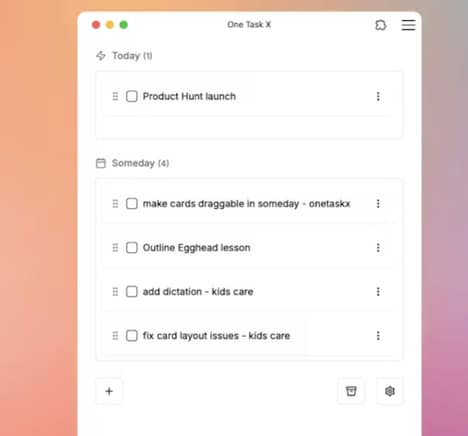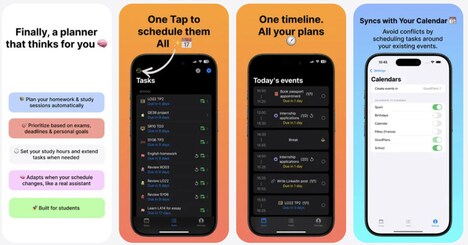

80/20 Planner is a productivity platform designed to help users identify the most impactful portion of their workload based on the Pareto principle. The tool leverages AI to generate tasks, assess their complexity, and score them according to potential value and effort.
By highlighting the “20% of work that drives 80% of results,” it enables professionals to prioritize effectively, reduce wasted effort, and focus on high-impact activities. From a business perspective, platforms like 80/20 Planner illustrate the integration of AI into task management and workflow optimization, helping teams and individuals make data-driven prioritization decisions. By providing structured insight into effort versus impact, the tool supports strategic planning, resource allocation, and efficiency improvements, particularly for knowledge workers, managers, and teams looking to optimize productivity in fast-paced work environments.
Image Credit: 80/20 Planner
Why This Trend Is Growing
- AI-powered Prioritization
- Platforms that use machine learning to rank tasks by projected impact create opportunities for software that consistently surfaces high-return activities across diverse roles and contexts.
- Effort-value Scoring
- Quantifying task complexity against potential value introduces room for models and interfaces that standardize decision-making heuristics across teams and reduce subjective prioritization.
- Outcome-focused Workflows
- A shift from task-counts to outcome-based metrics opens space for systems that restructure workflows around measurable results rather than time spent or completed items.
Industries Being Reshaped
- Knowledge-work Software
- Tools tailored to information workers can be transformed by embedding predictive prioritization features that reshape daily task lists into strategic impact pipelines.
- Project-management Consulting
- Consultancies have the potential to offer new service lines that blend AI-generated prioritization analytics with organizational change programs to optimize resource allocation.
- Enterprise Resource Planning
- ERP platforms could integrate effort-versus-impact scoring to realign budgeting, staffing, and timelines toward initiatives with the highest expected return.