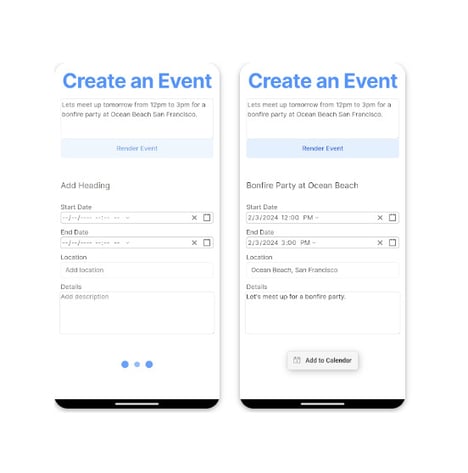
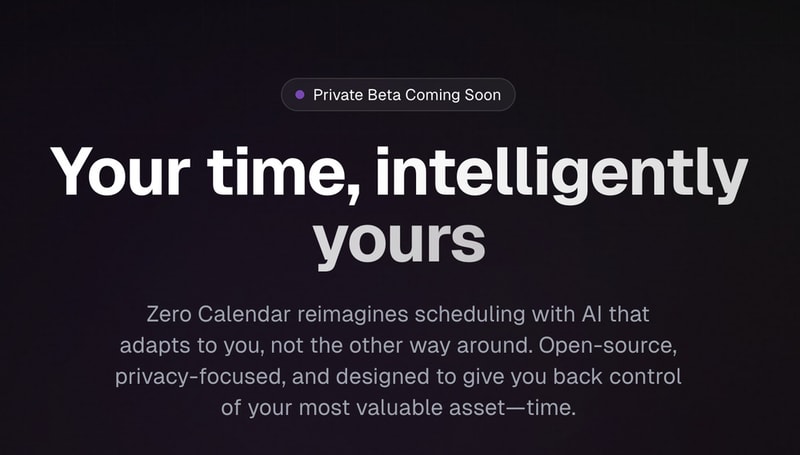
Zero Calendar is an open-source, AI-native scheduling tool designed to assist users with time management. It functions as an intelligent calendar system that automatically organises and optimises schedules based on user priorities and availability.
The platform is built to reduce manual planning effort by dynamically managing events and suggesting time allocations that improve productivity. As an open-source solution, it allows for transparency and potential community-driven development or customization. Zero Calendar is positioned for individuals and teams seeking more efficient ways to structure their time, particularly in environments with frequent meetings or shifting priorities. Its AI capabilities aim to support decision-making around scheduling by reducing conflicts and improving overall time utilisation. The tool reflects broader trends in productivity software where automation and intelligence are applied to everyday organisational tasks.
Image Credit: Zero Calendar
Why This Trend Is Growing
- AI-native Scheduling
- A shift toward embedding machine learning directly into calendar systems that can surface personalized meeting times and minimize scheduling conflicts for complex teams.
- Open-source Productivity Platforms
- As community-driven, transparent tooling, open-source calendars create potential for customizable workflows and integrations that adapt to unique organizational policies.
- Dynamic Time Allocation
- Adaptive algorithms that reallocate blocks of focus and meeting time based on priority signals and real-time availability, improving overall time utilization patterns.
Industries Being Reshaped
- Enterprise Saas
- Large-scale software vendors can incorporate intelligent scheduling to differentiate offerings by reducing administrative overhead across distributed teams.
- Human Resources & Workforce Management
- Workforce systems that integrate optimized calendars have the potential to streamline shift planning, availability tracking, and employee time-use analytics.
- Healthcare Scheduling
- Clinical operations may benefit from AI-driven appointment coordination that balances provider availability, patient urgency, and resource constraints.