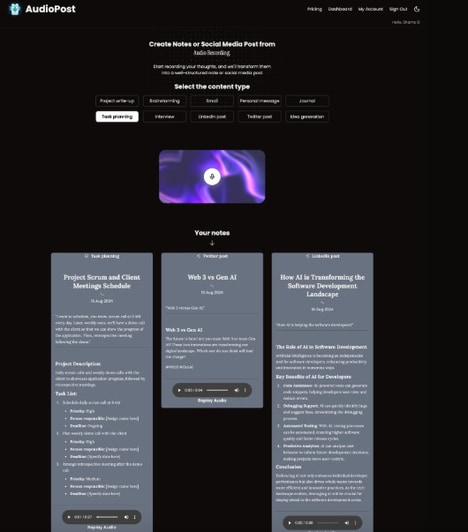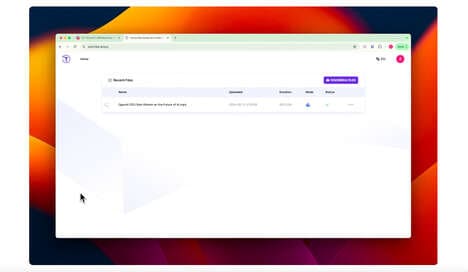
tulz.AI is an audio-to-text transcription service that leverages artificial intelligence and natural language processing to convert spoken content into written text. Designed for high accuracy — reportedly up to 98% — it caters to a wide range of professional use cases, including meeting documentation, content creation, academic research, and media production.
By automating transcription, tulz.AI can help businesses reduce the time and cost associated with manual transcription tasks, while improving accessibility and content repurposing. It reflects a broader shift in enterprise tools toward automation and streamlined workflows. For teams handling large volumes of audio content, or those seeking to enhance productivity, tulz.AI provides a scalable solution that can integrate into existing content pipelines or communication processes. It underscores the growing role of AI in transforming traditional back-office tasks into efficient digital processes.
Image Credit: tulz.AI
Key Themes Behind This Trend
- Automation of Professional Documentation
- AI transcription services like tulz.AI are revolutionizing how businesses handle documentation by significantly reducing time and cost expenses compared to manual transcription.
- Integration of AI in Content Creation
- The adoption of tools like tulz.AI indicates an increasing reliance on AI to streamline the content creation process, ensuring seamless integration into existing communication workflows.
- Enhanced Workflow Streamlining
- By integrating AI transcription tools, enterprises can experience a shift toward more efficient, automated workflows, showcasing a move toward comprehensive digital transformations.
Where This Applies
- Media Production
- The media industry benefits from AI transcription by enabling faster turnaround times for content creation and post-production processes.
- Academic Research
- AI-driven transcription services are instrumental for academic researchers, aiding in the efficient analysis of interviews and lectures.
- Corporate Communications
- Incorporating automated transcription, corporate communications improve through more accurate and timely documentation of meetings and important discussions.