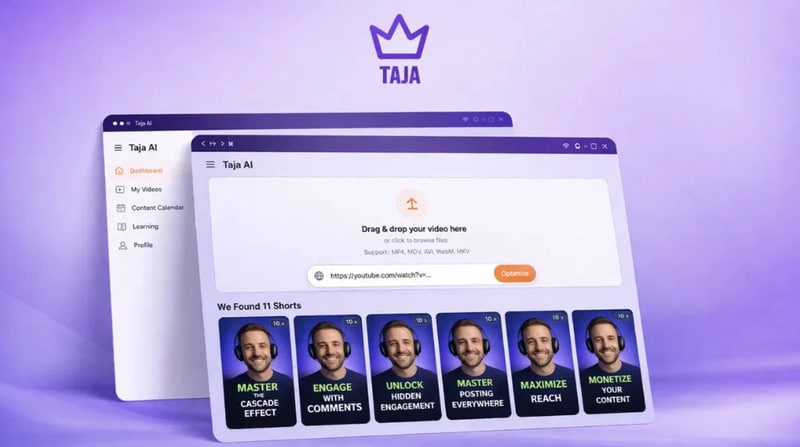
The Taja AI video clipping tool converts a single long-form recording into multiple short-form videos formatted for social platforms. The system uses automated scene detection, speech recognition, and subject tracking to identify key moments and restructure footage into separate clips. It also reframes content for vertical formats and generates captions for platforms such as TikTok, Instagram Reels, and YouTube Shorts. The workflow is designed to reduce manual editing time while maintaining consistency across multiple outputs from the same source material.
The platform supports batch clip generation, automated resizing, and multi-format exports tailored to different publishing requirements. It can detect highlights, organize sequences, and track speakers to maintain framing across each generated clip. Some versions also integrate transcription tools to support caption accuracy and editing control.
Image Credit: AppSumo
What Makes This Trend Stand Out
- AI Video Clipping Automation
- Automated conversion of long-form recordings into multiple short, platform-ready clips could displace manual editing workflows and enable rapid scale of content production.
- Multi-format Reframing
- Reformatting and captioning engines that produce vertical, square, and landscape variations from a single source may transform cross-platform publishing by ensuring consistent branding with minimal overhead.
- Speaker-tracked Highlighting
- Subject-tracking and scene-detection that isolates speakers and key moments could create highly personalized highlight reels and searchable clip libraries from otherwise unstructured footage.
Sectors Adopting This
- Social Media Marketing
- Tools that batch-generate optimized short clips could change campaign strategies by allowing brands to publish high-volume, platform-specific creative with fewer resources.
- Online Education
- Automated clipping and transcription technologies have the potential to convert long lectures into modular microlearning units and indexed study materials at scale.
- Media Production
- Integration of AI-driven resizing, sequencing, and captioning could streamline post-production pipelines and shift value toward curation and creative direction rather than manual editing.