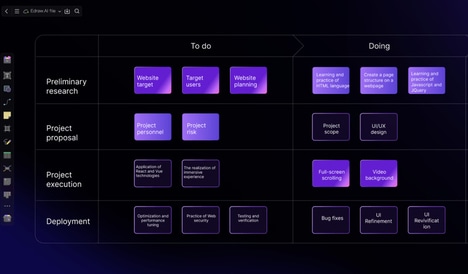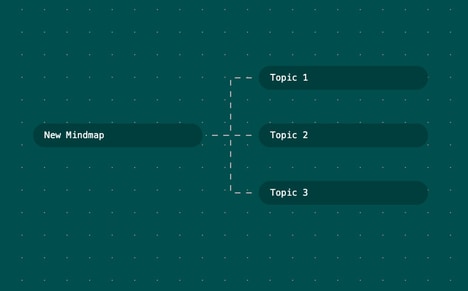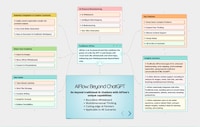
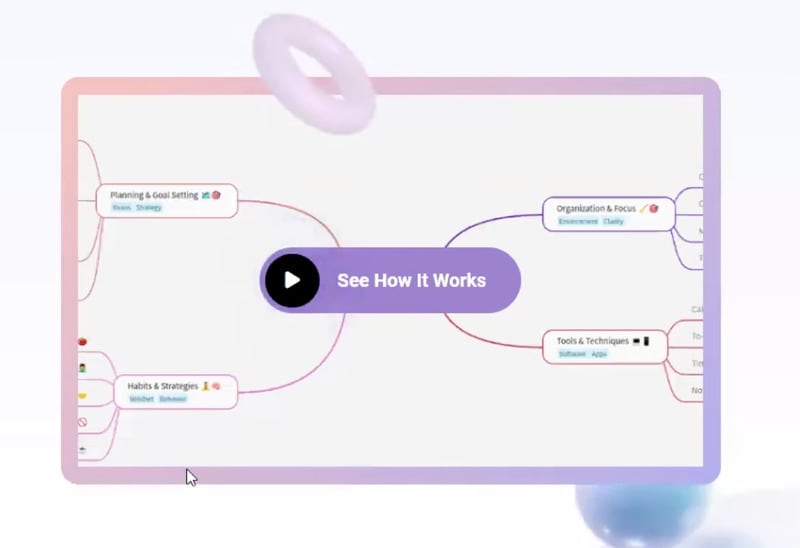
MindMap AI is an intelligent visualization platform that converts various content types — including text, PDFs, images, audio, and video — into structured mind maps. Designed for both students and professionals, it helps users organize ideas, summarize information, and identify key connections in complex topics.
The platform integrates real-time brainstorming and collaborative editing, allowing teams to work together seamlessly. Its AI-driven approach enables automatic extraction of insights and relationships, reducing time spent on manual note-taking and data organization. From a business standpoint, MindMap AI exemplifies how generative and analytical technologies can streamline knowledge management and creative workflows. By combining visualization and automation, it supports more efficient decision-making, enhances comprehension, and encourages structured thinking across education, research, and enterprise environments.
Image Credit: MindMap AI
Why This Trend Is Growing
- AI-powered Knowledge Management
- Intelligent systems like MindMap AI demonstrate the potential for AI to transform knowledge management by automating the extraction and organization of insights.
- Collaborative Brainstorming Platforms
- Platforms that integrate real-time collaboration with structured visualization tools are revolutionizing team ideation and decision-making processes.
- Interactive Visualization Tools
- The fusion of visualization with analytical technologies is elevating how individuals and teams interpret and engage with complex information.
Industries Being Reshaped
- Education Technology
- EdTech solutions are increasingly adopting AI-driven visualization tools to enhance learning experiences and promote critical thinking.
- Business Intelligence Software
- Innovations in BI software using AI and visualization are empowering enterprises to streamline data-driven decision-making.
- Research and Development
- R&D sectors are leveraging intelligent mapping tools to better organize, analyze, and present complex data sets and research findings.