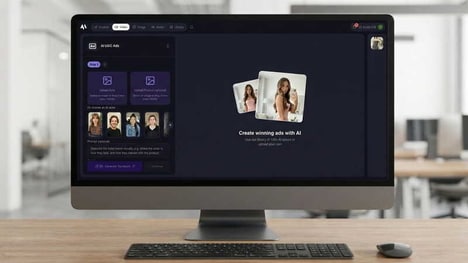
Luma launched Luma Agents, a set of agentic creative production tools built by the AI video startup Luma and powered by its Unified Intelligence family of models, designed to coordinate text, image, video and audio generation end-to-end. The system uses the Uni-1 multimodal model, featuring a single architecture trained for language, pixels and spatial reasoning to plan and render across formats.
Luma Agents were presented as a workflow platform for ad agencies, marketing teams and studios, with integrations that coordinate other models such as Ray 3.14, Veo 3, Seedream and ElevenLabs voice models. The agents maintain persistent context across assets, generate large variation sets, iteratively self-critique outputs and expose API access for enterprise rollouts.
For creative teams, the platform aims to compress long production cycles into conversational steering and automated iteration, enabling faster localization and versioning while keeping quality controls. By bundling planning, multiformat generation and evaluation, Luma Agents signal a shift toward agent-led creative pipelines that reduce manual cross-model prompting.
Image Credit: Luma
What's Driving This Trend
- Agent-led Creative Pipelines
- A shift toward autonomous agents coordinating planning, generation and evaluation presents opportunities to compress production timelines and automate cross-format orchestration.
- Unified Multimodal Models
- Models trained across language, pixels and spatial reasoning enable seamless planning and rendering across text, image, video and audio which could consolidate previously fragmented toolchains.
- Persistent Context Asset Management
- Maintaining ongoing context across iterations and variations allows for scalable versioning and consistency across large asset sets, reducing repeated manual rework.
Who This Affects Most
- Advertising and Marketing Agencies
- Marketing workflows that integrate agentic systems can yield rapid variant generation and localized creative, transforming campaign rollouts and A/B testing scale.
- Film Television and Animation Studios
- Studios stand to benefit from agent-driven previsualization and iterative multiformat rendering, shortening concept-to-delivery cycles while preserving creative intent.
- Localization and Global Content Services
- Localization providers could leverage persistent multimodal context to create consistent, high-volume localized assets across regions and formats with fewer manual touchpoints.