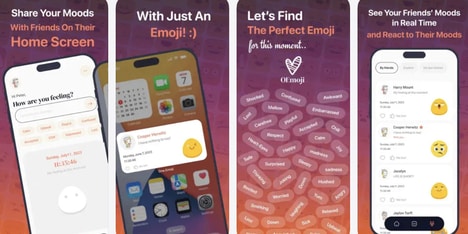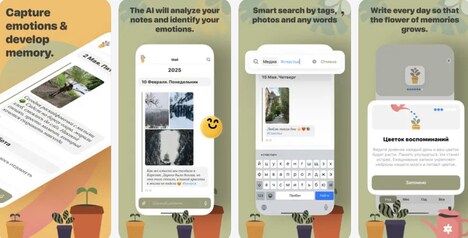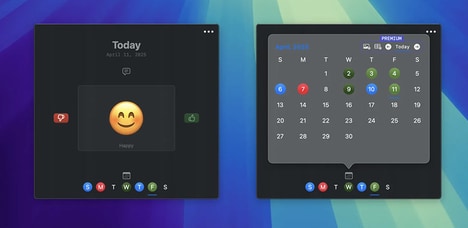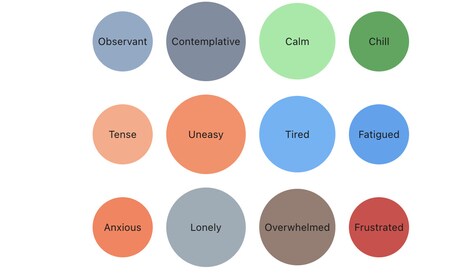
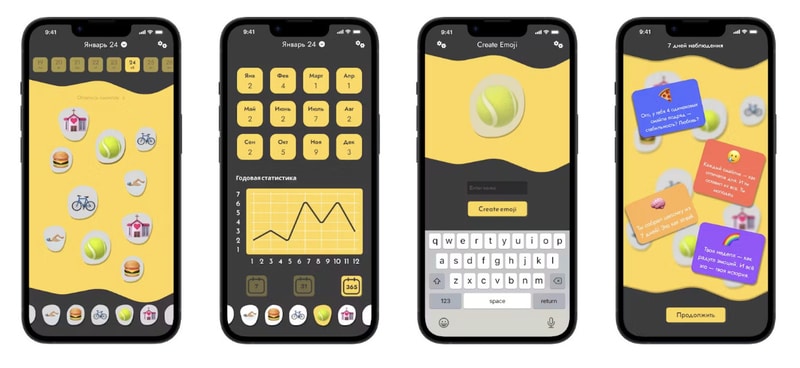
Emoji Diary is a lightweight journaling app that lets users quickly record their emotions and daily habits using only emojis. Instead of typing entries, users simply select emojis that represent how they feel and what they did, creating a fast and intuitive way to track their emotional patterns.
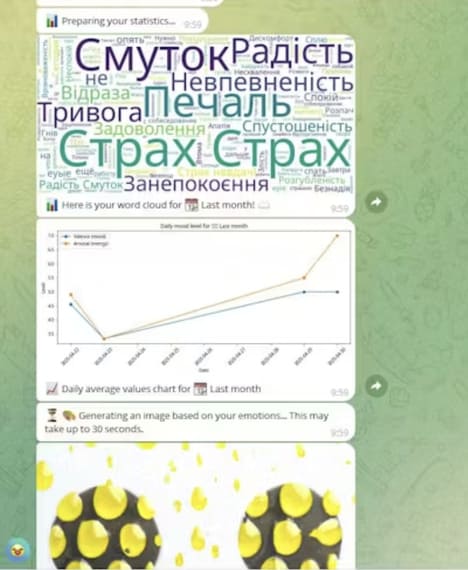
The app transforms everyday experiences into a colourful visual timeline, helping users recognise mood shifts and behavioural trends over time. By removing text input, it lowers friction and makes journaling more accessible, especially for users who struggle with traditional reflection methods.
Emoji Diary is designed for consistency, encouraging users to log entries in seconds throughout the day. Over time, this builds a personal emotional archive that is easy to browse and reflect on. Emoji Diary reframes self-tracking as a simple, expressive, and visually engaging habit that fits naturally into daily life.
Image Credit: Emoji Diary
Key Themes Behind This Trend
- Emoji-based Self-tracking
- Visual-first logging reduces the friction of personal reflection, creating space for wellness tools that translate everyday emotions and habits into instantly readable patterns.
- Micro-journaling Interfaces
- Brief, low-effort entries are reshaping digital journaling by making emotional check-ins more accessible for users who avoid long-form writing.
- Mood Pattern Visualization
- Colorful timelines of feelings and behaviors offer new potential for personal analytics platforms that surface mental wellness insights without clinical complexity.
Where This Applies
- Digital Wellness
- Consumer wellness apps can differentiate through expressive tracking systems that make self-awareness feel lightweight, engaging, and easy to maintain.
- Mental Health Technology
- Nonverbal emotional data introduces opportunities for supportive tools that help users recognize mood shifts before they become harder to manage.
- Mobile Productivity
- Habit-building platforms are evolving toward faster interaction models where simple visual inputs sustain consistency across daily routines.