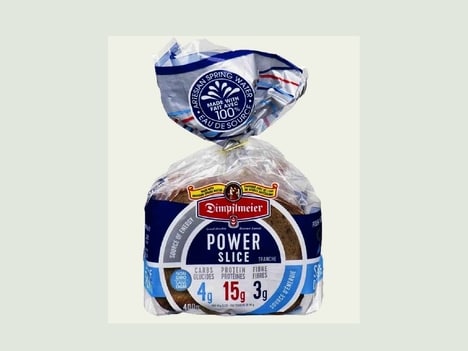
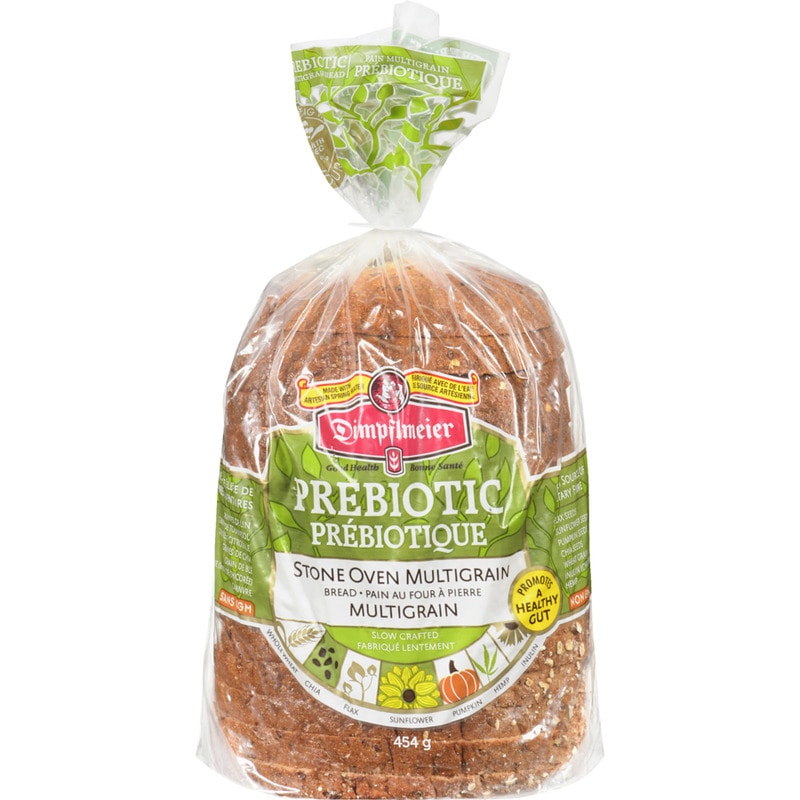
Dimpflmeier’s Prebiotic Multi-Grain Bread is a 454-gram loaf formulated to support digestive health by incorporating inulin, a chicory-root–derived prebiotic fiber. Baked with the company’s own artesian spring water, the product features no added fats or sugars and contains no trans fats. It is non-GMO and uses high-quality ingredients sourced to deliver a balanced nutritional profile while maintaining the artisanal characteristics of traditional German-style breads.
The ingredient list combines whole wheat flour with a blend of seeds—flax, sunflower, pumpkin, and chia—alongside hemp meal and hemp flour to provide dietary fiber, essential fatty acids, and plant-based protein. Natural sweeteners such as honey, brown sugar, and molasses are included in modest quantities, and wheat gluten, yeast, sea salt, and non-GMO canola oil complete the formulation. The addition of inulin aims to selectively nourish beneficial gut bacteria, potentially enhancing digestive regularity and overall gut microbiota balance.
Image Credit: Dimpflmeier
What's Driving This Trend
- Health-focused Baked Goods
- The emergence of baked products like prebiotic breads highlights a shift towards integrating functional ingredients that benefit gut health.
- Artisanal and Nutrient-rich Foods
- Combining traditional artisanal techniques with modern nutritional benefits represents a growing trend in the food industry appealing to health-conscious consumers.
- Plant-based Protein Enrichment
- An increasing demand for plant-based proteins is driving the inclusion of ingredients like hemp meal and hemp flour in bakery products.
Who This Affects Most
- Functional Foods Industry
- The development of food products incorporating prebiotics like inulin signals an expanded focus on products designed to enhance specific health benefits.
- Bakery Industry
- The bakery industry is evolving with an emphasis on differentiated products that not only meet traditional quality standards but also incorporate health-promoting ingredients.
- Natural and Organic Food Industry
- Consumer demand for clean-label and non-GMO products stimulates growth in sourcing and promoting high-quality, sustainable ingredients.