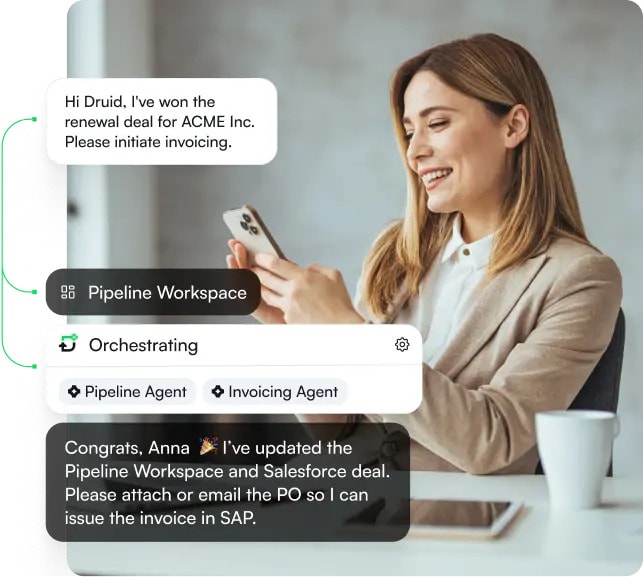
DRUID AI is leaning into the agentic AI movement, positioning its platform as a tool for orchestrating complex, multi-step business processes rather than handling simple Q&A interactions. The company's AI agents are designed to integrate with backend enterprise systems, trigger workflows, validate data, and escalate exceptions in real time. Industries like healthcare, banking, retail, and higher education have been early adopters, using the platform to automate tasks such as student enrollment, appointment scheduling, and claims processing.
The shift reflects a broader market trend away from static, rules-based chatbots toward systems capable of autonomous decision-making. DRUID AI reports that some of its customers now handle 60 to 70 percent of interactions through autonomous agents, freeing employees to focus on tasks requiring human judgment. With a partner network of over 200 system integrators and a growing US presence, the company is scaling its reach while emphasizing measurable ROI, accuracy metrics, and usability as key success indicators.
Why This Trend Is Growing
- Autonomous Enterprise AI
- The move towards agentic enterprise AI platforms highlights an innovative opportunity to create systems that autonomously manage complex processes and integrate seamlessly with existing enterprise frameworks.
- Real-time Decision-making
- The adoption of AI agents capable of real-time data validation and workflow triggering represents a disruptive shift from static rule-based systems to more dynamic decision-making frameworks.
- Scalable AI Integration
- The growing network of system integrators and emphasis on scalability illustrate a trend towards creating AI solutions that can be easily integrated and expanded within large organizational systems.
Industries Being Reshaped
- Healthcare Automation
- The healthcare sector is poised to be transformed by AI platforms that automate time-consuming tasks like appointment scheduling and claims processing, allowing for increased efficiency and accuracy.
- Banking AI Solutions
- In banking, the integration of autonomous AI agents presents an opportunity to optimize processes such as data validation and workflow escalation, enhancing customer interactions and backend operations.
- Higher Education Technology
- Higher education institutions could leverage agentic AI to streamline administrative tasks like student enrollment, offering a more efficient and responsive educational experience.