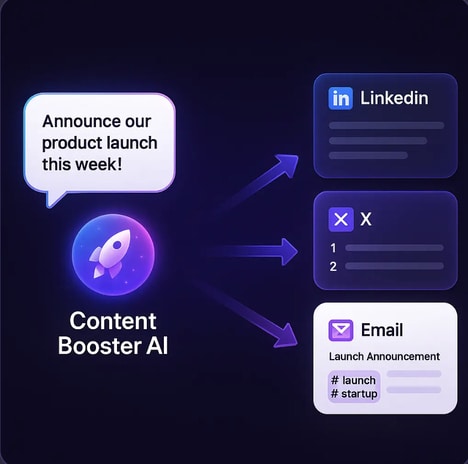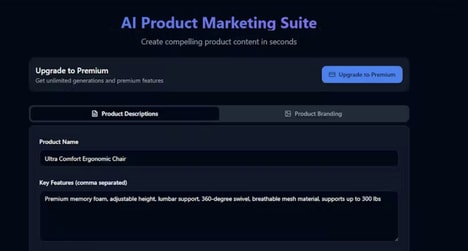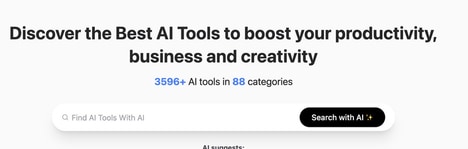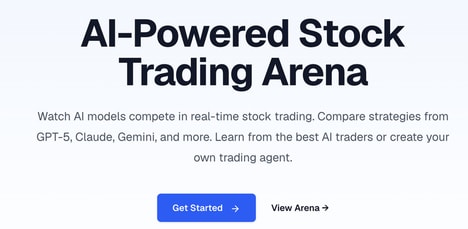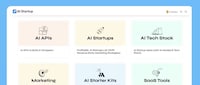
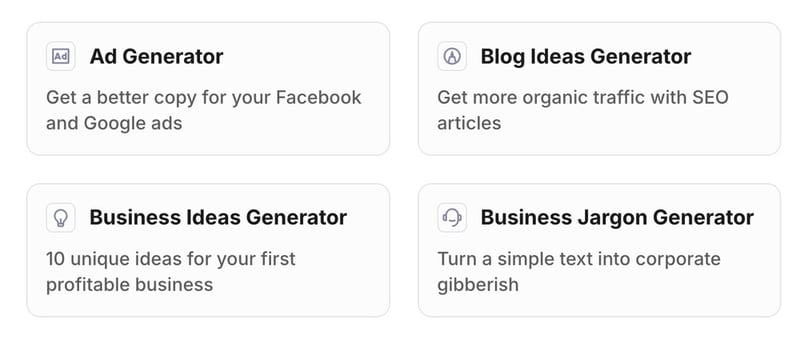
21 Free AI Marketing Tools is a collection of simple web-based tools designed to help founders and marketers complete common marketing tasks quickly using AI. It brings multiple utilities into one place, covering areas like audience research, business planning, copywriting, and keyword generation.
Each tool is built for fast use, allowing users to generate outputs in seconds without needing complex setup or onboarding. The goal is to reduce time spent on repetitive marketing work and make core tasks easier to handle during early-stage business building.
The platform includes tools for creating marketing copy, exploring target audiences, drafting ideas for campaigns, and generating SEO-related suggestions. This makes it useful for a wide range of everyday marketing needs in one streamlined toolkit.
Image Credit: 21 Free AI
Key Themes Behind This Trend
- No-code AI Marketing Suites
- A consolidated set of browser-based tools that enable nontechnical founders to generate marketing assets instantly, opening space for platforms that replace agency workflows with self-serve AI experiences.
- Micro-task AI Utilities
- Small, single-purpose AI utilities that produce specific outputs in seconds signal a shift toward modular toolchains that can be stitched together for bespoke marketing processes.
- Integrated Audience Insight Engines
- Tools combining audience research, copy generation, and SEO suggestions in one interface suggest opportunities for systems that unify data-driven targeting with creative execution.
Where This Applies
- Startup Marketing
- Early-stage companies benefit from instant, low-cost marketing outputs, creating demand for offerings that compress strategy and execution into rapid, trial-friendly formats.
- Saas Platforms
- Subscription software that embeds lightweight AI marketing features could disrupt traditional product roadmaps by prioritizing embedded outcome-oriented utilities over large feature sets.
- Digital Agencies
- Agencies face pressure to reconfigure services as clients adopt quick AI tools, pointing to models that blend human expertise with high-volume automated deliverables.