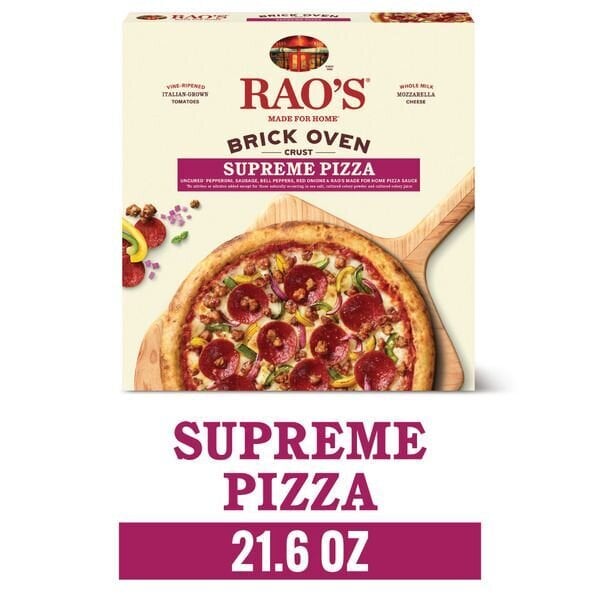
Rao's entered the frozen pizza category in 2022 with a six-pie line built around a brick-oven-style crust, giving pizza lovers another ready-made dinner option. The Italian-American sauce maker, whose food business dates back 130 years, carries its restaurant heritage into the freezer case instead of stopping at pasta sauce.
The sauce recipe skips water, and the brand imports its tomatoes from Italy. Buyers can pick up the pizzas at Target and Whole Foods, where the $12.99 suggested price places them above many freezer-aisle staples and closer to an ingredients-first purchase.
At $12.99 and with shelf space at Target and Whole Foods, Rao's asks buyers to extend trust in its pasta sauce to a higher-priced freezer purchase. The brick-oven crust and ingredient cues shift the comparison away from toppings alone and toward sauce quality, broadening how a frozen pizza can compete.
Image Credit: Rao's
What's Driving This Trend
- Heritage Brand Freezer Extensions
- Established pantry brands are translating long-held ingredient equity into frozen meals, creating room for premium prepared foods that rely on trust rather than discount positioning.
- Restaurant-inspired Frozen Meals
- Brick-oven crusts, imported tomatoes, and chef-adjacent cues are reshaping frozen aisles into destinations for elevated at-home dining alternatives.
- Premium Ingredient Positioning
- Higher-priced frozen products are increasingly competing on provenance, recipe restraint, and perceived authenticity, opening space for value definitions beyond convenience alone.
Who This Affects Most
- Frozen Foods
- The category is evolving from low-cost convenience toward premium, ingredient-led products that can justify higher price points in mainstream retail.
- Specialty Grocery
- Retailers with quality-focused shoppers are becoming launchpads for elevated freezer offerings that blur the line between everyday meals and gourmet purchases.
- Italian Food
- Sauce, pasta, and pizza brands are expanding across meal occasions, allowing familiar culinary heritage to anchor broader ready-to-eat portfolios.