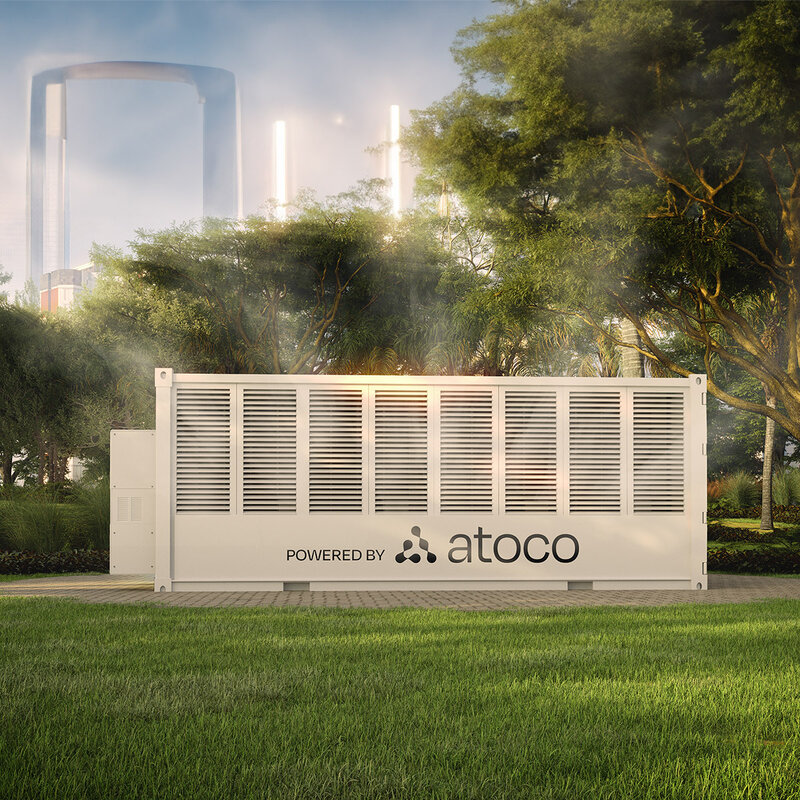
Atoco is building a water-harvesting machine that uses low-grade heat instead of grid power, enabling data center operators to turn waste heat into usable water. The Irvine company's unit pulls moisture from the air with metal-organic frameworks, porous materials tuned to capture water molecules and release them when warmed. Its parking-lot prototype yields up to 300 liters per day.
The setup works when relative humidity falls into the teens, opening drier sites than moisture-capture methods can manage. The frameworks release water at about 100 degrees Fahrenheit, so exhaust or server heat can drive the cycle without noisy operation.
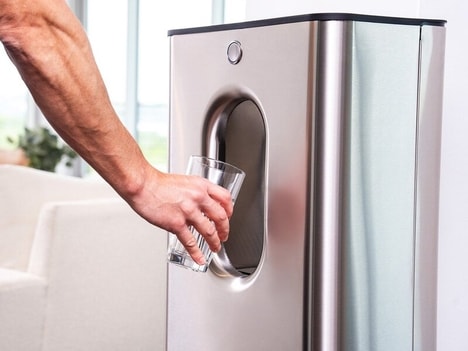
In use, warm air passes through the material, and a spigot releases a stream. Atoco aims for units that produce up to 1,000 liters per day and is running five on-grid trials in the US and the Gulf Cooperation Council. Atoco is targeting its first orders later this year.
Image Credit: Atoco
Why This Trend Is Growing
- Waste-heat Water Harvesting
- Data centers and industrial facilities gain a circular-resource pathway as low-grade heat becomes an input for decentralized water production.
- Metal-organic Framework Capture
- Advanced porous materials create new efficiency frontiers for atmospheric water systems that can function in unusually dry climates.
- Off-grid Utility Infrastructure
- Distributed machines that produce essential resources on-site reshape resilience planning for campuses, remote facilities, and high-demand commercial properties.
Industries Being Reshaped
- Data Centers
- Server heat can be reframed as a productive asset, linking cooling operations with localized water supply and sustainability targets.
- Water Technology
- Atmospheric extraction platforms expand the market beyond humid-region devices by enabling viable operation in arid and semi-arid environments.
- Commercial Real Estate
- Properties with waste-heat sources and water constraints may adopt embedded utility systems that reduce dependence on centralized infrastructure.