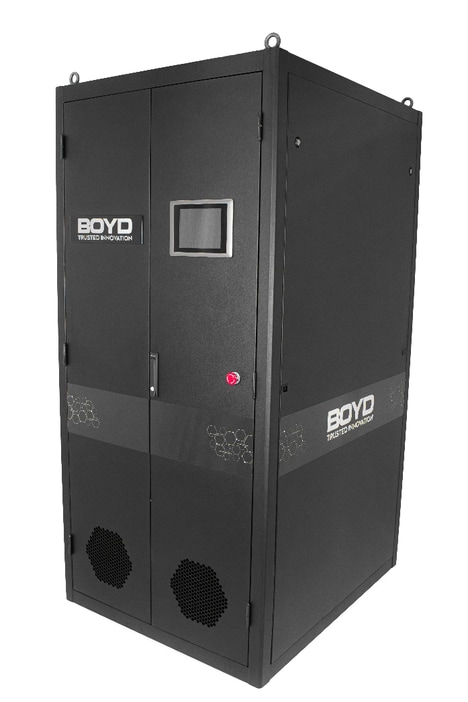
Water-free AI cooling is emerging as a promising solution for reducing the environmental impact of rapidly expanding data center infrastructure. Ferveret, a startup founded by researchers with backgrounds in nuclear engineering, has developed a liquid-based cooling system that improves heat transfer efficiency while eliminating water consumption. The technology submerges servers in a specialized liquid and uses a bubble-driven process adapted from nuclear reactor research to remove heat more effectively than conventional cooling methods. The company reports improvements in computational efficiency and reduced energy demands compared to existing liquid cooling approaches.
The development reflects growing pressure on data center operators to support increasing AI workloads without proportionally increasing resource consumption. As electricity demand and water usage become major concerns for the technology sector, advanced cooling systems could help operators lower operating costs, improve sustainability performance, and maximize computing output from existing infrastructure. Such solutions may also enable data center expansion in regions where water availability has historically limited large-scale deployment.
Image Credit: Ferveret
What Makes This Trend Stand Out
- Water-free Cooling
- Liquid immersion systems that eliminate water use are reshaping data center sustainability by reducing dependence on scarce local resources while supporting higher-density computing.
- AI Infrastructure Efficiency
- Rising AI workloads are creating demand for thermal management technologies that improve computational output without proportional increases in energy consumption or facility expansion.
- Nuclear-inspired Heat Transfer
- Engineering principles adapted from reactor research are opening new pathways for advanced cooling platforms with stronger heat removal performance than conventional liquid systems.
Sectors Adopting This
- Data Centers
- Resource-efficient cooling architectures are changing site selection economics by enabling large-scale facilities in water-constrained regions with lower operational risk.
- Artificial Intelligence
- More efficient thermal control across AI hardware environments strengthens the viability of intensive model training and inference while limiting infrastructure-related sustainability pressures.
- Clean Technology
- Sustainable cooling solutions represent a growing climate-tech category where reduced water consumption and lower energy demand can become core infrastructure advantages.