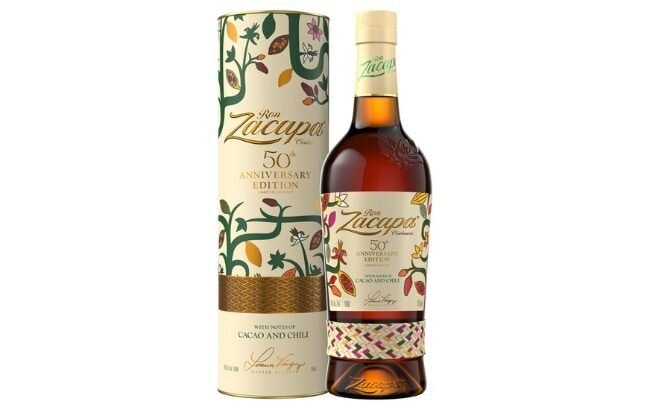
Zacapa’s ‘50th Anniversary Edition’ uses American white oak casks whose char incorporates Guatemalan cacao and Cobán chili peels, imparting cocoa and spice notes. It draws from rums matured for eight to 24 years and is a North America-only bottling tied to the brand’s Guatemalan roots.
It starts with virgin sugar cane syrup made on Guatemala’s Pacific coast before heading to an aging site more than 2,300 meters above sea level. From there, it moves through Zacapa’s solera cask system before being bottled at 40% ABV. The 750-ml release is available in four U.S. states for $49.99.
Availability in four U.S. states keeps the release selective while giving Zacapa a controlled rollout for a heritage-led finish built on cacao and chili. That barrel treatment turns an anniversary bottle into a clearer point of difference, widening how rum brands can stand apart without relying solely on age.
Image Credit: The Spirits Business
Why This Trend Is Growing
- Botanical Barrel Finishes
- Cacao-and-chili charred casks signal room for spirits brands to create distinct flavor signatures through localized ingredient treatments rather than traditional aging claims.
- Heritage-led Limited Releases
- Anniversary bottlings rooted in regional sourcing and production stories create premium differentiation by turning brand history into a collectible product experience.
- Controlled Regional Rollouts
- Selective state-by-state availability gives beverage companies a way to test demand, maintain scarcity, and build anticipation around specialized releases.
Industries Being Reshaped
- Premium Spirits
- Rum, whiskey, and tequila producers can expand premium positioning through experimental cask finishes that add provenance, sensory novelty, and shelf distinction.
- Cacao Products
- Cacao suppliers and craft chocolate makers gain new partnership potential as their ingredients become flavor-building tools in adjacent luxury beverage categories.
- Alcohol Retail
- Specialty liquor retailers benefit from limited-edition allocations that drive collector interest, store traffic, and higher-value discovery purchases.