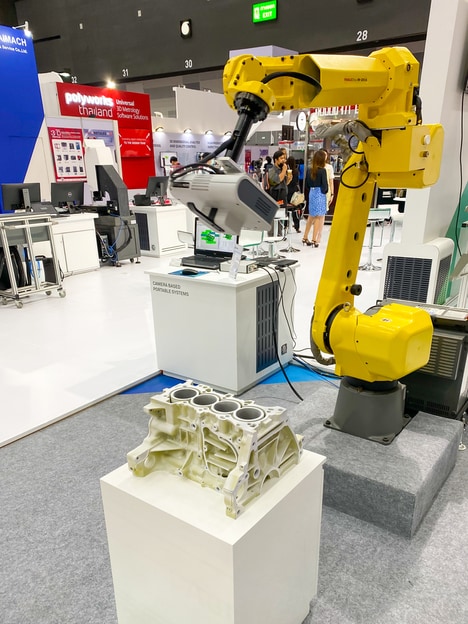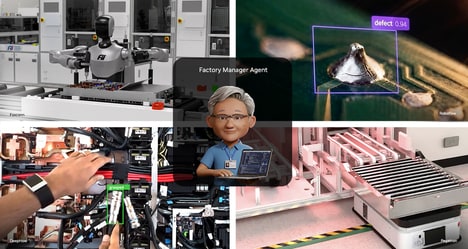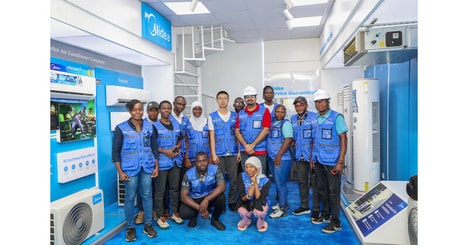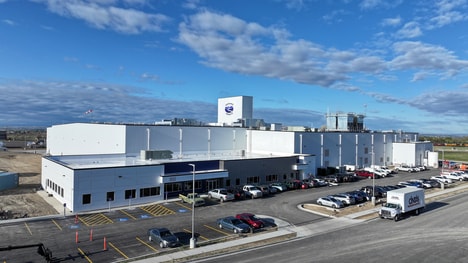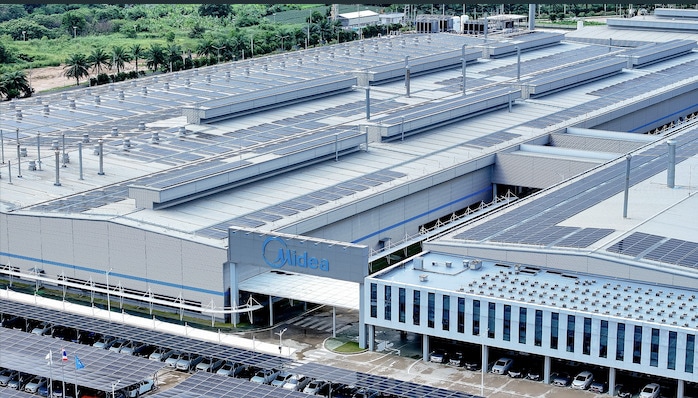
Midea Group has launched an Agentic Factory Overseas Expansion Solution — a modular and standardized system derived from the company's own WRCA-certified agentic factory in Jingzhou.
Midea Group broke down the agentic factory in Jingzhou into 12 rapidly replicable modules addressing cross-cultural employee training, cross-border supply chain traceability, and quality control. Field validation at Midea's Thailand refrigeration plant showed a 43% rapid reduction in order lead time, a 32% drop in customer complaint rates, and a 62% shortening of employee training cycles.
A company that has struggled to maintain quality standards when moving production from China to Southeast Asia would find value in the VOC-to-VOP seven-step quality solution, which draws on a knowledge base of over 12 million quality cases to trace customer complaints back to specific production lines within seconds.
Image Credit: Midea Group
What Makes This Trend Stand Out
- Modular Factory Replication
- Standardized production modules create faster international factory rollouts with more consistent operating procedures across regions.
- AI-driven Quality Traceability
- Large-scale quality knowledge bases enable complaint patterns to be linked to specific production lines in near real time.
- Cross-cultural Workforce Acceleration
- Localized training systems reduce onboarding complexity for overseas plants while preserving technical consistency across global teams.
Sectors Adopting This
- Advanced Manufacturing
- Agentic factory models reshape plant expansion by combining modular design, automation, and standardized quality governance.
- Supply Chain Technology
- Cross-border traceability platforms provide greater visibility into production movement, supplier performance, and quality risk.
- Industrial Automation
- Autonomous factory systems integrate data, robotics, and process intelligence to support scalable overseas production networks.