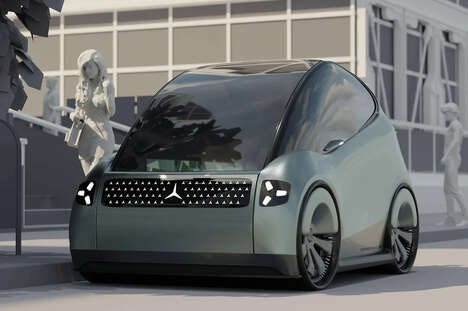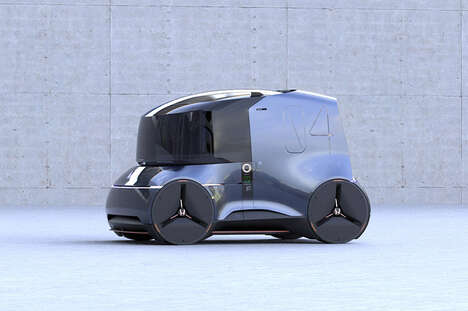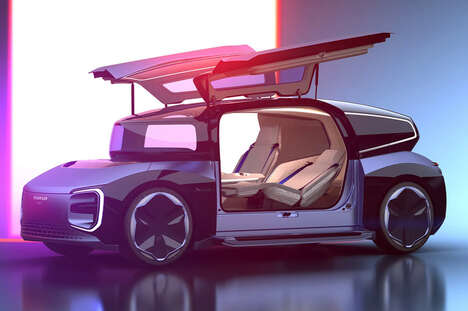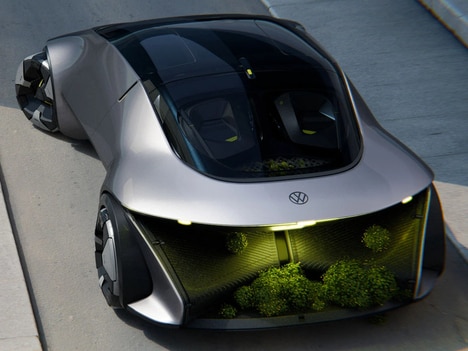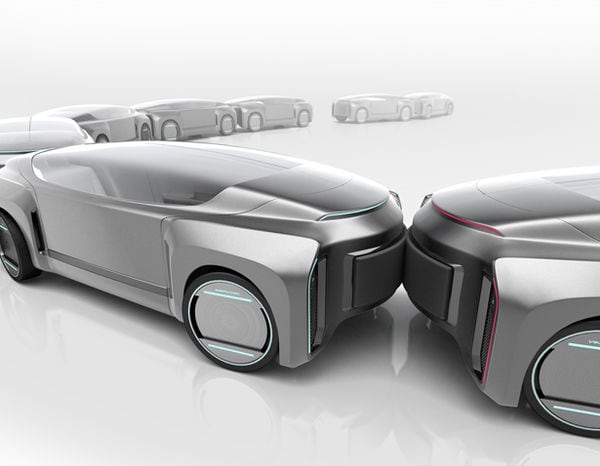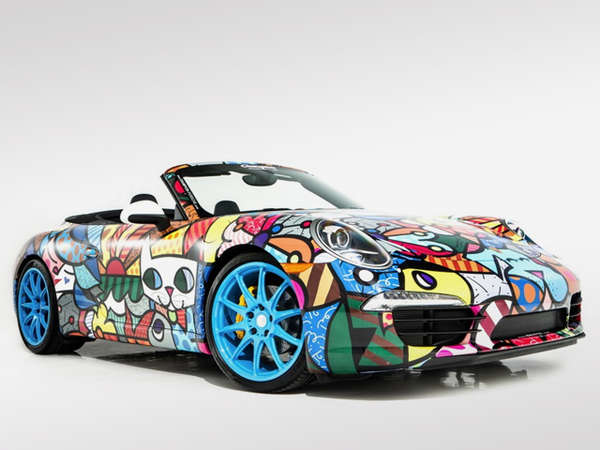
Brazilian designer Diogo Uzêda’s futuristic Way-V electric car is designed to give a different driving experience. The external layer consists of flexible polymer and touts characteristics like auto-regeneration, water repelling and impermeability. The internal layer of the car is also capable of changing its optical characteristics according to the needs of the users.
Way-V also features a computer with nano-composite touch-sensitive polymer, which informs and guides the driver and serves as a normal home PC to store files or images.
What's Driving This Trend
- Flexible Polymer Technology
- The Way-V electric car's use of flexible polymer for its external layer opens up opportunities for other industries to explore innovative materials that offer auto-regeneration, water repelling, and impermeability.
- Adaptive Optical Technology
- The Way-V electric car's ability to change its optical characteristics presents disruptive innovation opportunities for industries that can benefit from adaptive optics, such as entertainment, gaming, and augmented reality.
- Nano-composite Touch-sensitive Polymer
- The Way-V electric car's computer with nano-composite touch-sensitive polymer technology paves the way for advancements in touch-sensitive interfaces in industries like consumer electronics and smart devices.
Who This Affects Most
- Automotive
- The Way-V electric car's innovative features and materials offer opportunities for disruptive innovation in the automotive industry, such as creating more customizable and adaptable vehicles.
- Entertainment
- The Way-V electric car's adaptive optical technology can revolutionize the entertainment industry by providing immersive experiences and interactive visuals in movies, theme parks, and virtual reality.
- Consumer Electronics
- The Way-V electric car's nano-composite touch-sensitive polymer technology can inspire advancements in touch-sensitive interfaces for consumer electronics, including smartphones, tablets, and wearable devices.