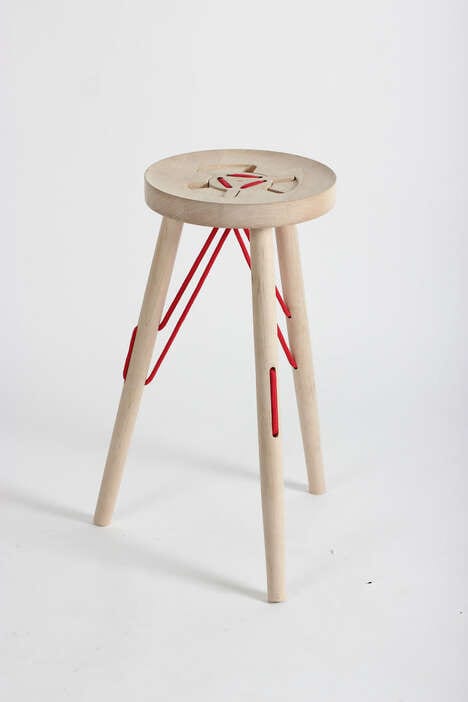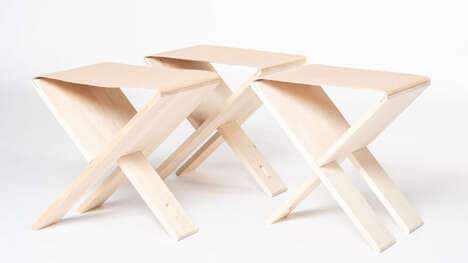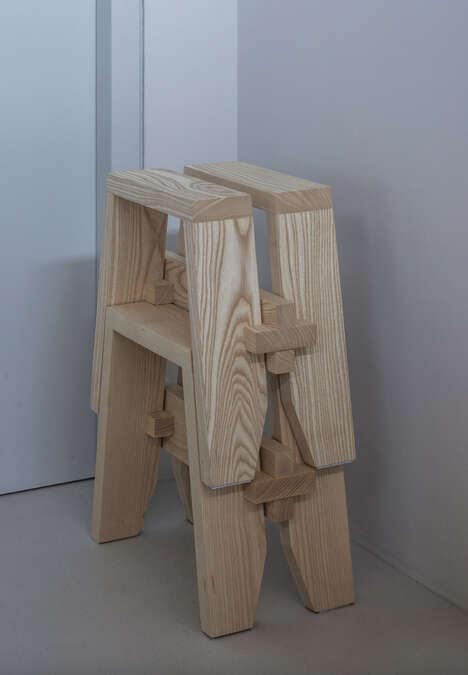

The convention of constructing a backless chair involves the assembly of vertical supports and a separate seat on top. Unusually, these Brunner Hoc Stools have sittable surfaces that are formed by the horizontal extension of each of the weight-bearing props.
Three elegant pieces of molded oak or beech wood broaden smoothly and gradually from fine footprints. Once they've reached full height, the treated timber components form soft 90-degree bends and expand into warped pentagonal shapes. Together, the trio fit together like pieces of a puzzle.
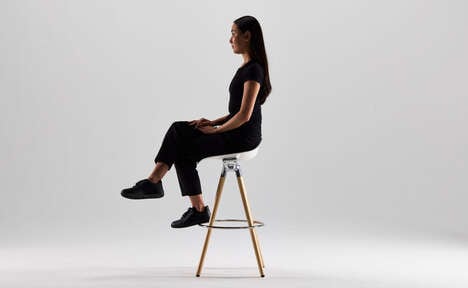
Two models of the Hoc Stools include a short version and a tall barstool with a metal brace and footrest. Jürgen Laub and Markus Jehs have finished off their crisp-looking creations with matte, lacquer or varnish and the choice of colorful or natural timber.
Key Themes Behind This Trend
- Merging Stool Designs
- Designing stools with seats made from the merging of each of their legs presents a unique and eye-catching aesthetic.
- Gradual Wood Broadening
- Using molded oak or beech wood that broadens smoothly and gradually from fine footprints offers a visually pleasing and ergonomic design.
- Puzzling Stool Assembly
- Creating stools that fit together like pieces of a puzzle provides an innovative and customizable seating solution.
Where This Applies
- Furniture Design
- The furniture design industry can explore the use of merging stool designs to create unique and visually appealing seating options.
- Woodworking
- In the woodworking industry, the technique of gradual wood broadening can be utilized to create ergonomic and aesthetically pleasing wooden furniture.
- Interior Design
- Interior designers can incorporate puzzling stool assembly into their designs to provide innovative and customizable seating arrangements for their clients.