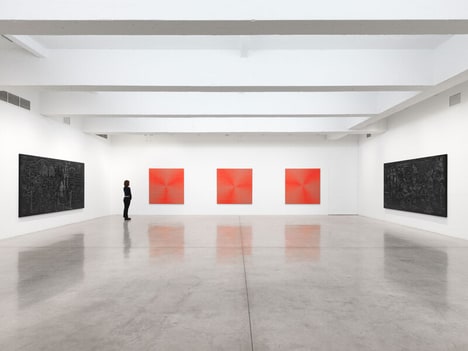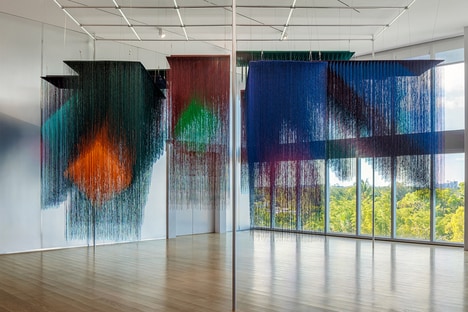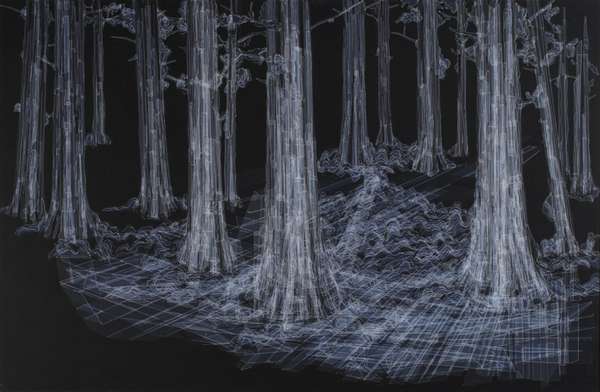
The Hong Seon Jang Labyrinth exhibition at the David B. Smith gallery in Denver, Colorado, showcases two unique collections curated specifically for the show, as well as a selection of his other work.
The New York-based artist traditionally forgoes the use of the usual artist's materials of choice in favor of reworking mundane, man-made objects.
The 'Black Forest' collection, which Jang created as part of the exhibition, features multiple layers of overlapping, translucent tape pasted onto a black chalkboard. He makes another interesting material choice in his 'Black Ruin' project, which is also part of his solo show. By gingerly placing string across a canvas, the artist adds flair to his work. Both of these projects fuse man with nature through the use of non-natural materials used to convey the environment which the artist is inspired by.
What Makes This Trend Stand Out
- Sustainable Art
- Art using unconventional materials challenges traditional art-making and encourages sustainability efforts.
- Mixed-media Installations
- Artists incorporate multiple materials into their installations to create a unique sensory experience.
- Interactive Art
- Art installations encourage audience participation and interaction, creating a more immersive experience.
Sectors Adopting This
- Art and Design
- Artists, museums, and galleries can incorporate sustainable materials and mixed-media installations to create unique exhibitions.
- Advertising and Marketing
- Interactive and immersive art installations can be used in experiential marketing campaigns to engage consumers in a new way.
- Architecture and Design
- Architects and interior designers can incorporate transformative art installations into their projects, creating unique and innovative spaces.