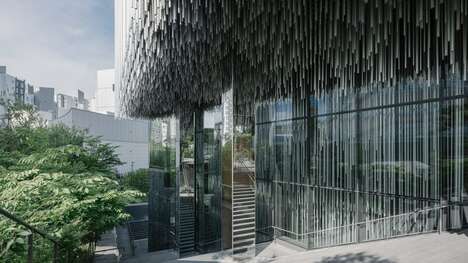
This 100-meter high tower is a design proposal by DRA&U Architects for a wine museum in Santiago de Chile, Chile.
Offering a fresh perspective on traditional museum design, this towering wine museum features a series of holes, or capillaries, all over its facade. According to the architects, these capillaries allow the building to act like a living organism in which external and internal "volumes" are able to connect. The system of holes also allows for strategic lighting: exhibition spaces do not receive direct sunlight, while at the same time, visitors can enjoy a 360-degree view of the city and park below.
The architect team behind this design include Simone Luciani, Livia Campana, Giorgio Pini, Annapina Di Filippo and Yana Ivanova.
What's Driving This Trend
- Living Facades
- The use of capillaries and holes in the facade of buildings creates living organisms that connect internal and external spaces, offering a fresh perspective on traditional designs.
- Strategic Lighting
- The system of holes in the facade of buildings allows for strategic lighting that balances natural light and minimizes direct sunlight in exhibition spaces, providing enhanced visitor experiences.
- 360-degree Views
- Designing buildings with capillaries and holes in the facade enables visitors to enjoy panoramic 360-degree views of the surrounding city and landscape, enhancing the overall aesthetic and appeal of the space.
Who This Affects Most
- Architecture
- Architects can incorporate innovative facade designs such as capillaries and holes to create living organisms that connect internal and external spaces, offering unique and aesthetically pleasing structures.
- Museum
- Museums can adopt strategic lighting techniques through the use of holes in the facade, allowing for optimal exhibition space lighting while maximizing natural light and providing an immersive visitor experience.
- Real Estate Development
- Incorporating capillaries and holes in the facade of buildings can be an attractive feature for real estate developers, providing opportunities to create properties with stunning 360-degree views that appeal to potential buyers.