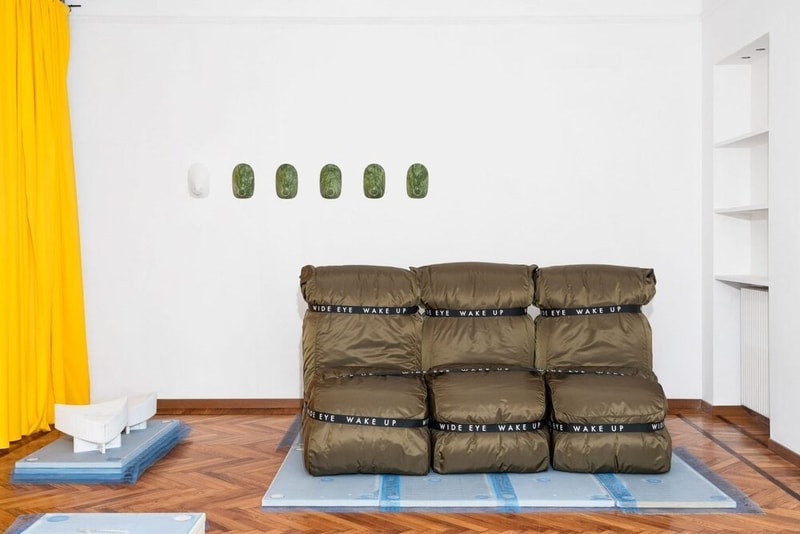
Wide Eye by Older Studio was presented during Milano Design City 2020 as an installation focused on visual perception and spatial distortion. The exhibition used reflective materials, lighting, and layered surfaces to create shifting perspectives as visitors moved through the space. Rather than presenting static objects, the project emphasized changing viewpoints, encouraging viewers to question how environments are visually constructed and experienced.
The installation formed part of a broader citywide program that replaced Milan Design Week during the pandemic, activating galleries and studios across the city. Wide Eye positioned itself within this context as an experimental interior environment, where reflections and transparency altered depth and orientation. The project aligned with Older Studio’s interest in scenography and material manipulation, using controlled visual effects to transform a conventional exhibition setting into an immersive spatial experience.
Image Credit: Delfino Sisto Legnani
What Makes This Trend Stand Out
- Immersive Spatial Perception
- Installations that manipulate sightlines and depth create environments where audience movement continuously redefines spatial understanding, opening prospects for novel perception-driven products and services.
- Reflective-material Manipulation
- Use of mirrors, coatings, and layered transparencies produces mutable surfaces that alter orientation and scale, suggesting breakthroughs in adaptive materials for dynamic environments.
- Dynamic Exhibition Scenography
- Exhibitions designed as changing scenographic systems prioritize transient viewpoints and staged illusions, pointing toward programmable, responsive exhibition formats that shift with visitor behavior.
Sectors Adopting This
- Museums and Galleries
- Curatorial practices integrating movement-dependent displays and variable optics create opportunities for institutions to host mutable collections that change narrative through visitor interaction.
- Interior Architecture
- Architectural interiors employing reflective planes and controlled lighting generate perceptions of expanded or reoriented space, indicating potential for adaptive architectural elements that transform functional layouts.
- Event Production and Experience Design
- Temporary citywide activations relying on layered visual effects and spatial distortion enable large-scale experiential narratives, implying demand for production tools and systems that orchestrate fluid, site-specific spectacles.