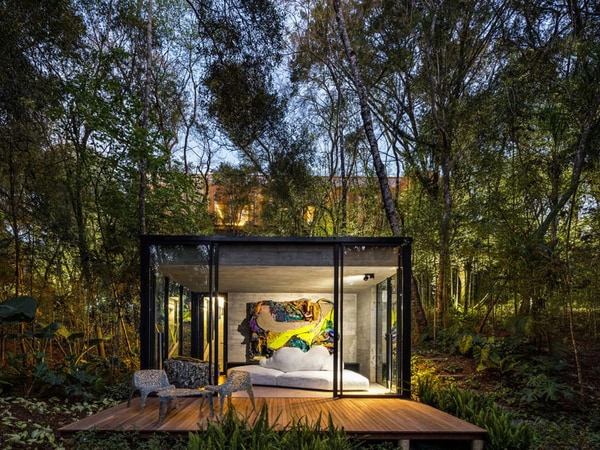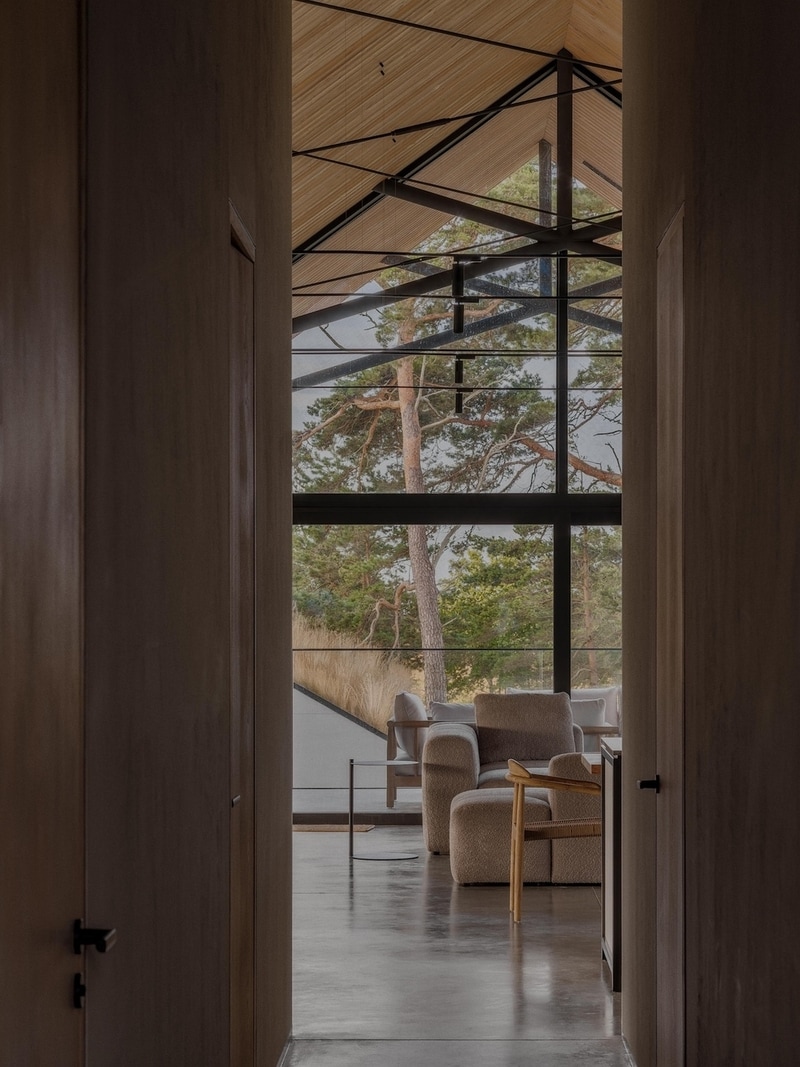
The SAR Residence by OAD - Open Architecture Design is a residential project on the Baltic coast in Latvia, built on the foundations of former Soviet-era military bunkers. The site originally contained four grass-covered concrete structures, which have been repurposed into one main residence and two guest houses for a multigenerational family. The design preserves the original bunker footprints while introducing a new architectural layer above, including a raised volume that bridges between existing foundations.
The main house features a glass facade supported by a custom metal frame and clad with fibre cement panels that reference the original concrete structures. The guest houses retain earth-covered roofs that blend into the surrounding landscape and support local biodiversity. Interiors use restrained materials such as wood and concrete, with layouts oriented to natural light and views across the coastline.
What's Driving This Trend
- Adaptive Reuse of Military Infrastructure
- Converting decommissioned bunkers into livable spaces reveals potential for transforming obsolete defense assets into unique real-estate stock that commands niche market value.
- Landscape-integrated Architecture
- Buildings that retain earth-covered roofs and low profiles demonstrate a growing appetite for designs that merge built form with existing topography to support biodiversity and visual continuity.
- Lightweight Framed Glazed Additions
- Elevated glass volumes supported by custom metal frames indicate opportunities for adding transparent, modern living space atop heavy concrete bases while minimizing additional load.
Who This Affects Most
- Residential Architecture
- Design practices oriented toward repurposing rigid structural remains show prospects for new service lines focused on hybrid historic-contemporary housing tailored to multigenerational clients.
- Heritage Conservation
- Conserving military-era footprints while introducing contemporary interventions suggests methods for balancing preservation mandates with adaptive reuse value creation.
- Construction Materials Manufacturing
- Demand for fiber cement panels, corrosion-resistant metal framing, and soil-retaining roofing systems points to product development opportunities that address durability, aesthetics, and ecological integration.