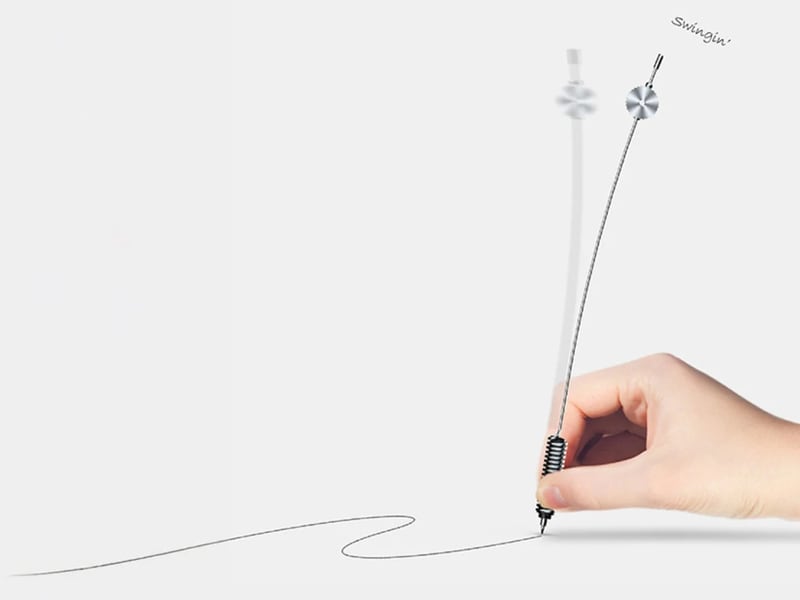
The Yamaha Swing Scribe is a concept writing tool developed as part of Yamaha’s Scribe Tool Design project, rethinking handwriting as a rhythmic, physical experience. The pen incorporates a weighted tip attached to a slender metal arm, which swings as the user writes. This pendulum-like motion introduces a subtle, continuous beat into each stroke, translating movement into a tactile rhythm that feeds back into the hand.
The mechanism is adjustable, allowing the weight to slide along the arm to change the swing’s arc and resistance. A wider swing produces a slower, more deliberate rhythm, while a shorter range supports faster writing. The design draws inspiration from feather quills, where natural motion once influenced writing flow, but formalizes it into a controlled system.
Image Credit: Yamaha
Why This Trend Is Growing
- Rhythmic Haptic Writing
- Integration of timed mechanical oscillation into writing instruments creates new forms of expressive handwriting and personalized flow metrics.
- Adjustable Mechanical Feedback
- Variable-weight pendulum mechanisms that alter resistance and tempo point to modular hardware designs that tune motor control and stylistic output.
- Analog-digital Hybrid Stationery
- Physical rhythm-generating pens paired with sensors and software enable capture of kinetic handwriting data for analysis and creative augmentation.
Industries Being Reshaped
- Personal Writing Instruments
- Premium pen makers can differentiate products by embedding tactile rhythm systems that redefine luxury writing experiences and user identity cues.
- Educational Tools and Learning
- Classroom and learning-aid developers may leverage rhythm-enhanced tools to support fine-motor skill development and handwriting fluency tracking.
- Therapeutic Rehabilitation Devices
- Rehab technologies incorporating adjustable pendulum feedback present opportunities to assist motor relearning and provide measurable progress signals for clinicians.