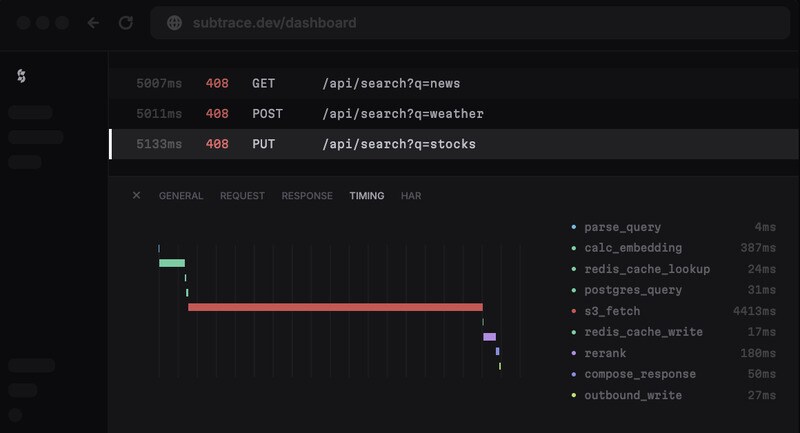
Subtrace is a developer-focused tool that integrates backend observability directly into Chrome DevTools. Its core function is to consolidate critical request data — such as payloads, latency, status codes, headers, and logs—into a single, accessible interface within a browser environment.
For engineering teams, this can streamline debugging workflows by reducing the need to switch between multiple monitoring tools or backend dashboards. From a business perspective, Subtrace aligns with ongoing efforts to improve development efficiency and shorten incident-resolution cycles. By centralizing relevant data where developers already work, it supports faster root-cause identification and potentially lowers operational overhead. The tool reflects a broader industry trend toward embedding observability earlier in the development process, making real-time insight more accessible without extensive infrastructure changes.
Image Credit: Subtrace
What Makes This Trend Stand Out
- Embedded Observability Tools
- Embedding observability capabilities directly into development environments like Chrome DevTools can revolutionize real-time debugging and efficiency for engineering teams.
- Consolidation of Monitoring Data
- The integration of various data points such as payloads, latency, and status codes into one interface enables streamlined workflows and more agile incident resolution.
- Shift to Developer-centric Monitoring
- Focusing on tools that align with where developers are already working reflects a shift towards minimizing disruption and enhancing productivity in the development cycle.
Sectors Adopting This
- Software Development
- Integrating observability into commonly used development tools offers the software industry a path to more efficient and less fragmented debugging processes.
- IT Operations Management
- Centralizing backend observability data within popular development environments marks a significant innovation in reducing operational overhead and enhancing monitoring efficiency.
- Cloud Computing Services
- Integrating observability at the development level aligns with industry's move toward more scalable and less intrusive cloud-based monitoring solutions.