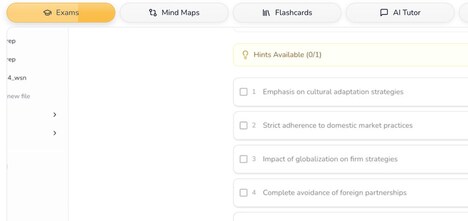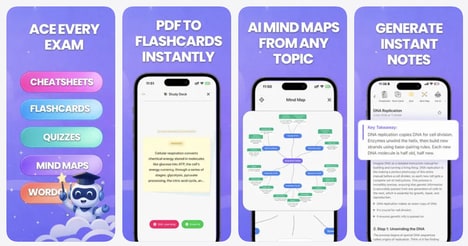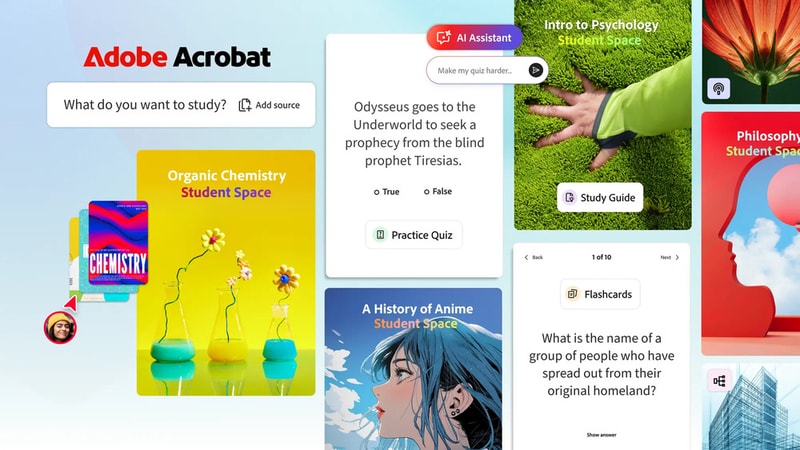
Adobe’s Student Spaces in Acrobat introduces an all-in-one AI-powered study environment designed to streamline how students learn, collaborate and retain information. The platform allows users to upload notes, documents and links to automatically generate study guides, mind maps, flashcards and quizzes, while also offering audio summaries and podcast-style content for on-the-go learning. Its built-in AI assistant stands out by providing responses with interactive citations, helping users verify information directly within their materials. Combined with real-time collaboration tools, the feature brings multiple study methods into a single, centralized space.
This reflects a growing shift toward integrated, subscription-based ecosystems that prioritize convenience and personalization. By embedding advanced AI features into an already widely used platform, Adobe strengthens user retention and expands its appeal among student audiences. This approach also positions the brand competitively against standalone edtech tools, while creating opportunities to scale similar features across professional and enterprise markets.
Image Credit: Adobe
What's Driving This Trend
- Integrated AI Study Ecosystems
- Centralized platforms that combine AI tutoring, collaboration and content generation create opportunities to disrupt fragmented learning tool stacks by offering single-subscription ecosystems that lock in user workflows.
- AI-generated Multimodal Learning Materials
- Automatically produced study guides, flashcards, audio summaries and quizzes enable a shift from static textbooks to personalized, multimodal content experiences that can redefine content creation and distribution models.
- Citation-enabled AI Assistants
- AI responses with interactive citations introduce a new trust layer in generative systems that could transform verification norms and elevate platforms that embed provenance directly into user workflows.
Who This Affects Most
- Edtech Platforms
- Established and emerging education technology providers face the potential to be upended by incumbents embedding advanced AI study features into general-purpose productivity tools, changing competitive dynamics and user expectations.
- Higher Education Institutions
- Colleges and universities may see traditional course materials and support services disrupted as AI-powered study ecosystems enable scalable, personalized learning outside conventional LMS boundaries.
- Enterprise Learning and Development
- Corporate training and professional development functions could be reshaped by integrated AI study tools that make just-in-time, personalized upskilling more efficient than legacy instructor-led or modular e-learning approaches.