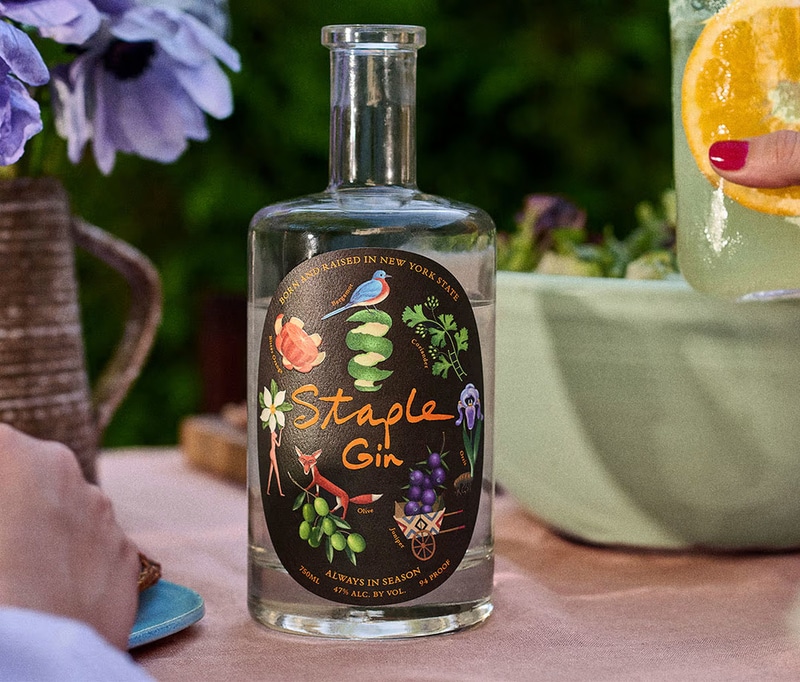
Staple Gin is a new, recipe-driven spirit developed by Rachael Ray, perfected for preparing cocktails and incorporating into meals. The savory spirit itself gets its personality from being distilled with classics like juniper, plus coriander, orris root, Castelvetrano olives, bitter orange peel, bergamot orange peel, tarragon, and extra virgin olive oil.
While the signature Staple Gin Martini is simply made by combining the spirit with dry vermouth and, optionally, a few dashes of Angostura orange bitters and fresh garnishes, the spirit also lends itself well to making frozen gin & tonics, and salty or herbaceous cocktails. As far as food, Staple Gin begs to be worked into seafood dishes like Dirty Martini Shrimp & Linguine or Lobster & Shrimp Fra Diavolo.
Key Themes Behind This Trend
- Recipe-driven Spirits
- A rise in spirits formulated around specific recipes and culinary pairings creates room for products that bridge mixology and cooking with consistent flavor profiles tailored to dishes and cocktails.
- Culinary-grade Alcohol
- Premium spirits designed for both drinking and cooking enable novel value propositions where taste stability under heat and precise seasoning attributes become selling points.
- Savory Botanical Blends
- The use of olive, tarragon, bergamot and other savory botanicals points to new flavor systems that redefine traditional spirit categories and broaden application across savory cuisines.
Where This Applies
- Foodservice and Restaurants
- Chefs and mixologists could integrate multiuse spirits into menu engineering that simplifies back-of-house inventory while introducing signature flavor-driven dishes and beverages.
- Consumer Packaged Goods Spirits
- Brands in the spirits shelf space may capitalize on differentiated, recipe-oriented SKUs that target home cooks as well as cocktail consumers with clear culinary use-cases.
- Grocery Retail and Specialty Food
- Retailers stocking culinary spirits alongside oils, vinegars, and condiments have the potential to create cross-category merchandising that reframes alcohol as an ingredient rather than solely a beverage.