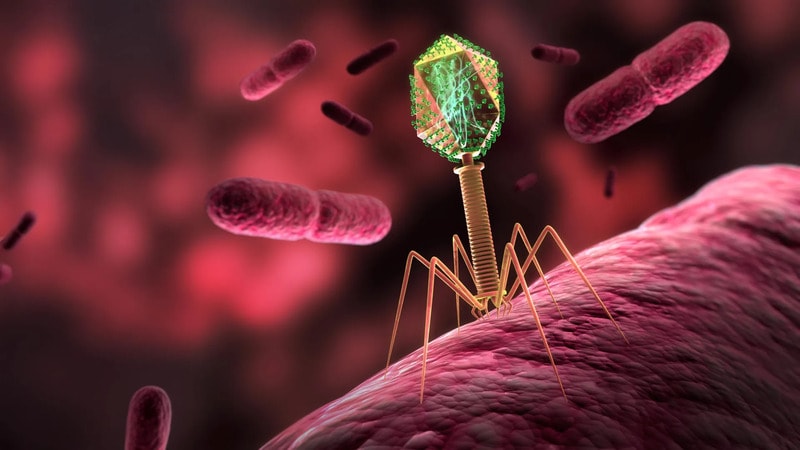
Researchers from the University of Wisconsin–Madison investigated how space evolved phages, behave when infecting E. coli in microgravity aboard the International Space Station. The team sent the T7 phage to orbit, where it still infected its bacterial host but followed a different evolutionary path, featuring altered timing and interaction dynamics compared to Earth-based controls. This setup allowed scientists to track how both viruses and bacteria adapted to the near-weightless environment.
Genomic analysis showed that space-exposed T7 phages accumulated mutations in genes linked to receptor binding, potentially refining how they attach to bacterial cells. The E. coli samples in microgravity also developed distinct defensive mutations that supported survival under spaceflight conditions. Follow-up work used deep mutational scanning, a method that systematically tests many genetic variants, to map how changes in the phage receptor binding protein affected infection performance.
The study demonstrated that space conditions can reveal new evolutionary solutions that are less apparent in terrestrial labs, enriching the toolkit for precision phage design.
Image Credit: Science Daily
Why This Trend Is Growing
- Space-enhanced Phage Evolution
- Space environments offer unique conditions that accelerate and diversify the evolutionary pathways of phages, leading to novel genetic adaptations that might not occur on Earth.
- Microgravity-guided Infection Dynamics
- Microgravity conditions alter the interaction dynamics between phages and bacterial hosts, potentially enhancing phage efficacy against drug-resistant bacteria.
- Precision Phage Therapy Design
- Deep genomic insights from space-exposed phages enable the creation of more effective and targeted phage therapies that are specifically designed for resistant bacterial strains.
Industries Being Reshaped
- Pharmaceutical Biotechnology
- The pharmaceutical biotechnology industry can harness space-evolved phages to develop advanced therapies that combat antibiotic-resistant infections.
- Space-based Research and Development
- Industries focused on space-based research can provide unique platforms for conducting experiments that uncover new biological insights not possible under Earth's conditions.
- Genomic Analysis and Bioinformatics
- Innovations in genomic analysis and bioinformatics could advance through the study of space-evolved organisms, offering breakthroughs in understanding complex genetic adaptations.