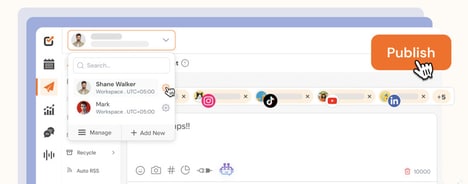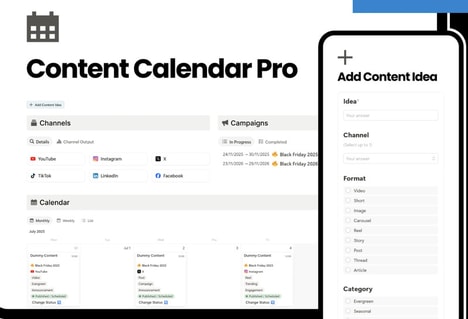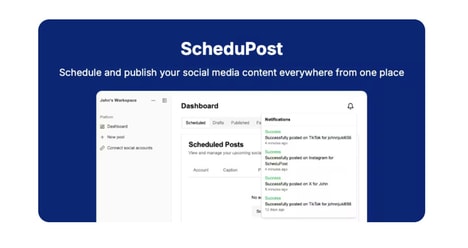
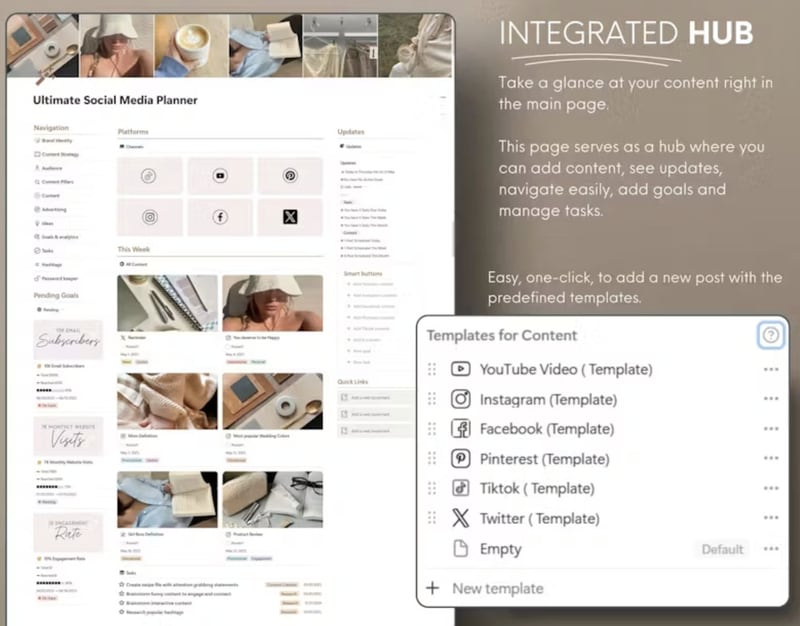
The Social Media Content Planner is a digital tool designed to help individuals and teams organize, schedule, and manage content across social media platforms using Notion. It allows users to ideate, structure, and track posts in a centralized workspace, providing visibility into publishing timelines and content strategy.
From a business perspective, this type of planner can improve workflow efficiency, support consistent branding, and facilitate collaboration between marketing teams. By integrating content ideation, scheduling, and posting into a single system, it reduces manual coordination and streamlines decision-making. It also provides the ability to analyze planned content performance and adjust strategies accordingly. The Social Media Content Planner reflects a growing trend toward structured, productivity-focused digital tools that combine planning, execution, and analytics for marketing and social media management.
Image Credit: Social Media Content Planner
Key Themes Behind This Trend
- Integrated Content Workspaces
- Centralized planning environments that combine ideation, scheduling, and analytics within Notion-like platforms can replace fragmented toolchains for social teams.
- Automate-to-post Workflows
- The fusion of planning tools with native posting capabilities suggests platforms that minimize manual handoffs between scheduling and publishing.
- Collaboration-first Content Systems
- Enhanced real-time collaboration and role-based views point toward systems that streamline cross-functional content approval and brand consistency.
Where This Applies
- Social Media Marketing
- Marketing agencies could leverage planner-driven insights to offer more predictable campaign outcomes and tighter client reporting.
- Productivity Software
- SaaS productivity vendors may incorporate publishing and analytics features into note-taking apps to expand enterprise value propositions.
- Analytics and Attribution
- Media analytics firms stand to develop attribution models tied directly to planned content schedules for clearer ROI measurement.