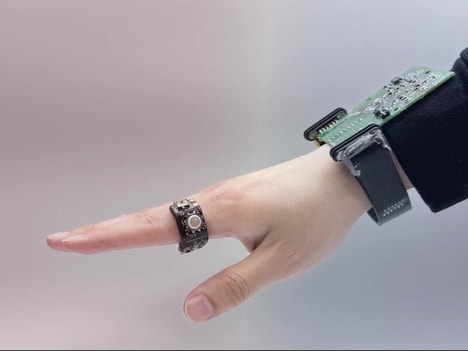
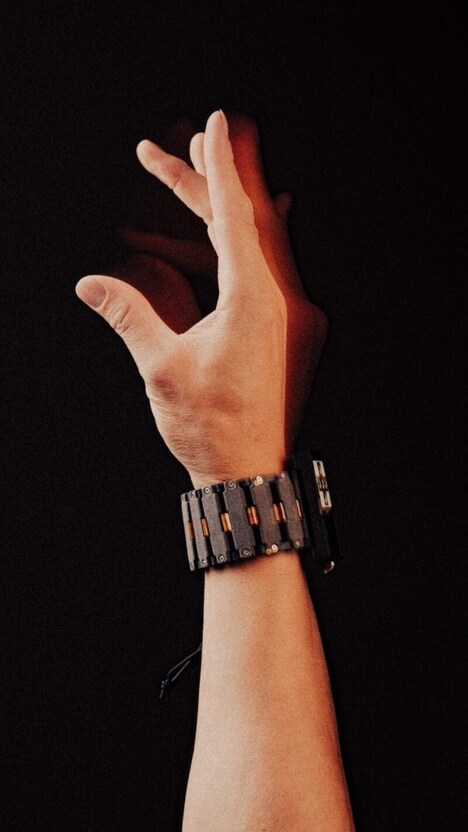
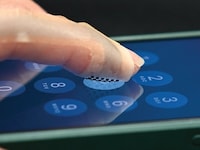
The Skin Buttons project by Carnegie Mellon's Future Interfaces Group is taking digital projections to a new level. Working buttons are projected onto skin. This is done by using small lasers to create small, bright red icons from the bottom of a wrist watch. The touch-sensitive buttons can be designed in any shape as well and therefore display a variety of information.
Described as "cheap, small, low-power and clickable fixed-icon laser projections," Skin Buttons were developed by Xiang 'Anthony' Chen, Chris Harrison, Scott E. Hudson, Gierad Laput and Robert Xiao of the university's Human-Computer Interaction Institute.
As John Biggs of TechCrunch explains, "by expanding a watch interface off of the physical object you get a bigger palette on which to create." This also allows users to interact with the interface without making the screen larger.
What Makes This Trend Stand Out
- Digitally Projected Interfaces
- Disruptive innovation opportunity: Expanding interfaces beyond physical objects allows for more creativity and functionality.
- Touch-sensitive Button Technology
- Disruptive innovation opportunity: Integration of touch-sensitive buttons directly onto skin opens up new possibilities for interactive experiences.
- Projection-based Wearable Technology
- Disruptive innovation opportunity: Utilizing projection technology on wearables can enhance user interfaces and provide versatile information display.
Sectors Adopting This
- Consumer Electronics
- Disruptive innovation opportunity: Incorporating projection-based interfaces into consumer electronics can enhance user experience and create new market segments.
- Wearable Technology
- Disruptive innovation opportunity: Touch-sensitive skin projections can revolutionize the way wearable devices interact with users.
- Human-computer Interaction
- Disruptive innovation opportunity: Advancements in touch-sensitive button technology can drive innovation in human-computer interaction and user interface design.